
Our plan today was to make the journey to Trinidad de Cuba which turned out to be a four hour taxi ride from Havana. The first 2.5 hours is on a 6 lane motorway, that seems to carry little traffic. The driver weaved his way along it avoiding potholes and areas of disrepair. Cuba’s wet climate and the expense of upkeep on a road the is under-utilised seemed to combine. When we turned off the main highway the road was much narrower and there was lots of horse and cart traffic to contend with. There aren’t many petrol stations, but we stopped at one that was 1 kilometre from a town named Australia, so that was a little funny. Additionally we passed through lots of farmland primarily growing food crops like rice, corn, beans and sugar cane. The latter part of the drive the landscape went from flat farming country to hills and mountain backdrops.
Once we arrived in Trinidad, we checked into our room which is a lot newer that the National Hotel in Havana and hence most things seem to work well, although the WiFi is a bit slow. We scheduled in a walking tour around the old city and our guide was waiting when we arrived. The hotel is situated opposite the Municipal Square, commonly known these days as WiFi square, so there are always lots of locals hanging out at the square.
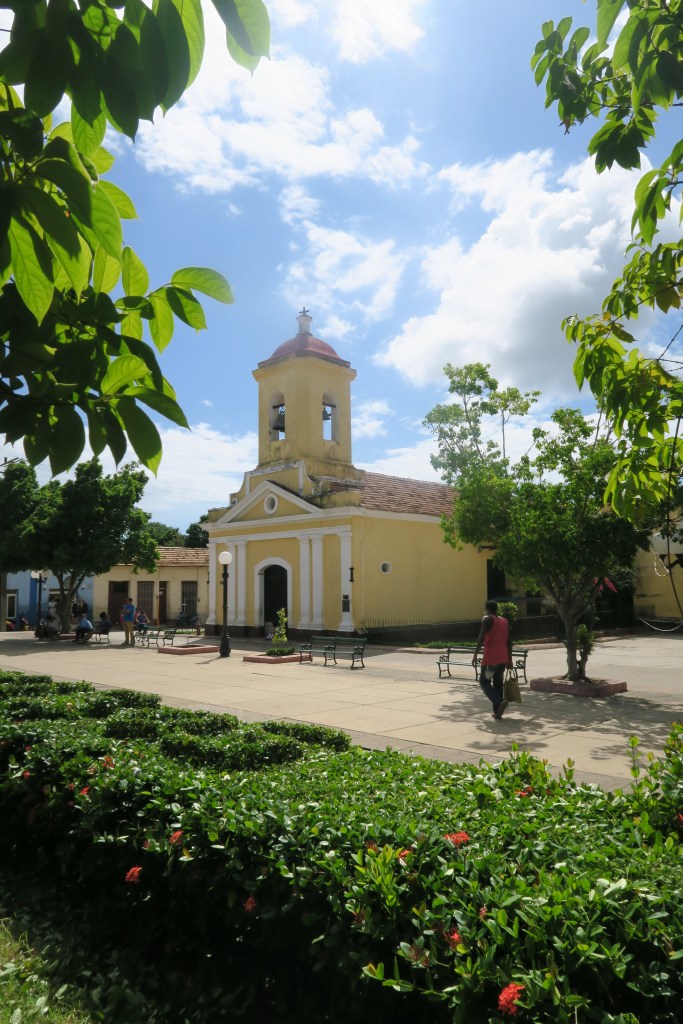
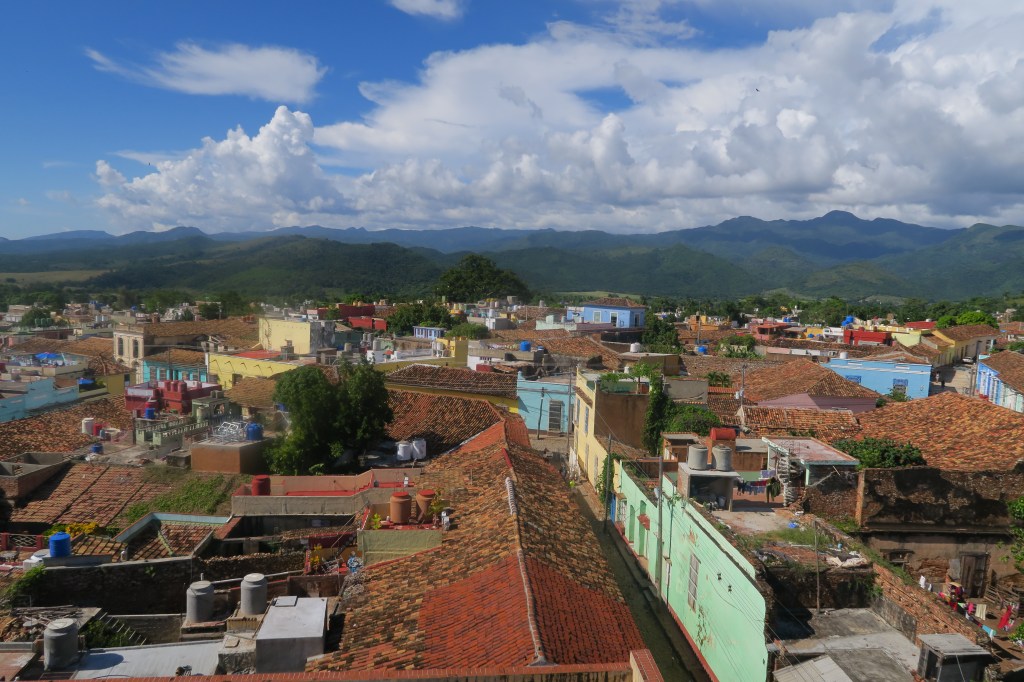
Our guide explained that Cuba has now adopted a new constitution that allows for Municipal elections, but the overall government is still selected and run by the communist party. He also explained that prior to revolution his parents were not entitled to education because of the segregation laws. The Castro regime removed all of these restrictions and made education and health care free for all Cubans. This has resulted in a homogenous society, at least on the surface. Addittionally, Cubans are now allowed to have small businesses so all the houses on the main streets now have shops or cafes in them. The average Cuban worker earns $45AUD per month in their government job and many have a second job or business to supplement their income.
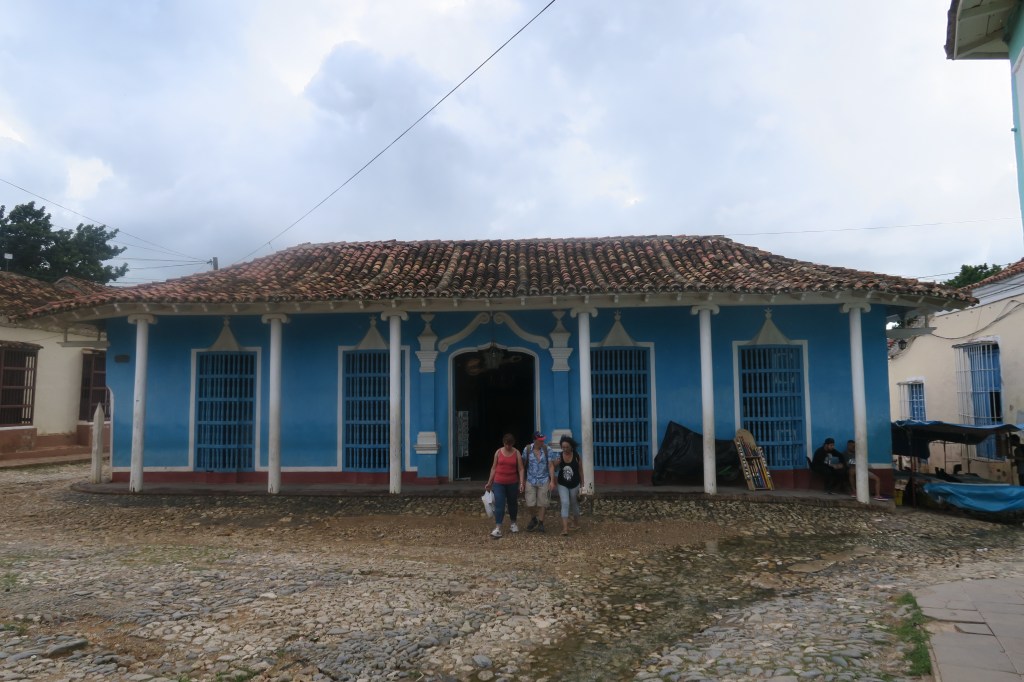
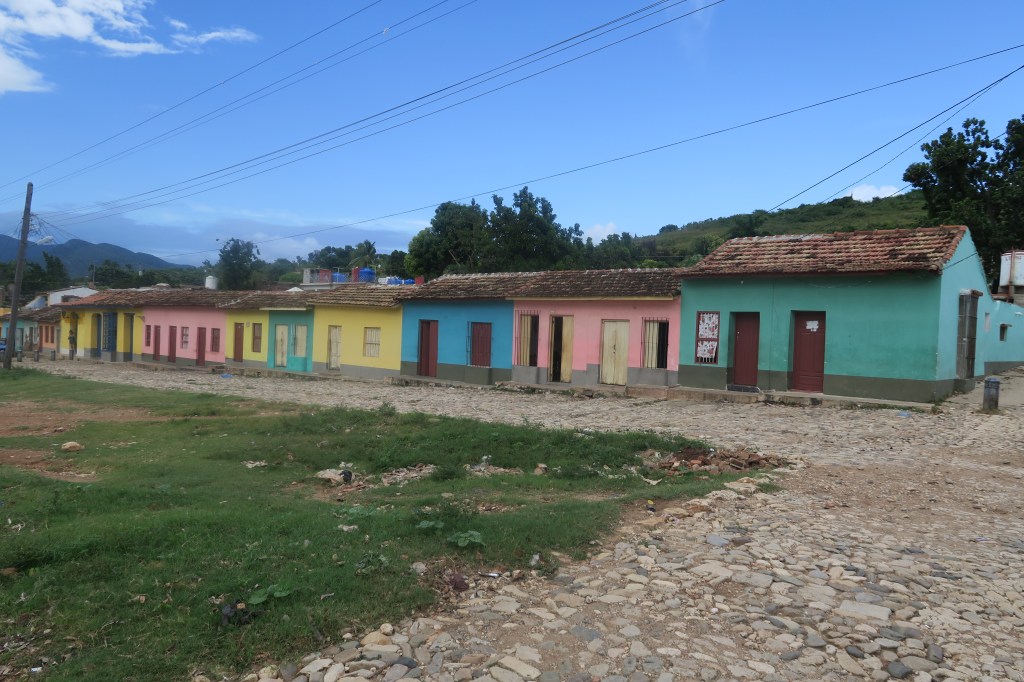
Trinidad was first claimed for Spain on Christopher Columbus’ first voyage in 1492 and was made a city in 1509. The streets are paved with stones that came here as ballast in ships that were then loaded with cargo like sugar cane that was originally sent to England to be made into molasses and other sugar products. After a while local sugar mills were established, but more about that tomorrow.
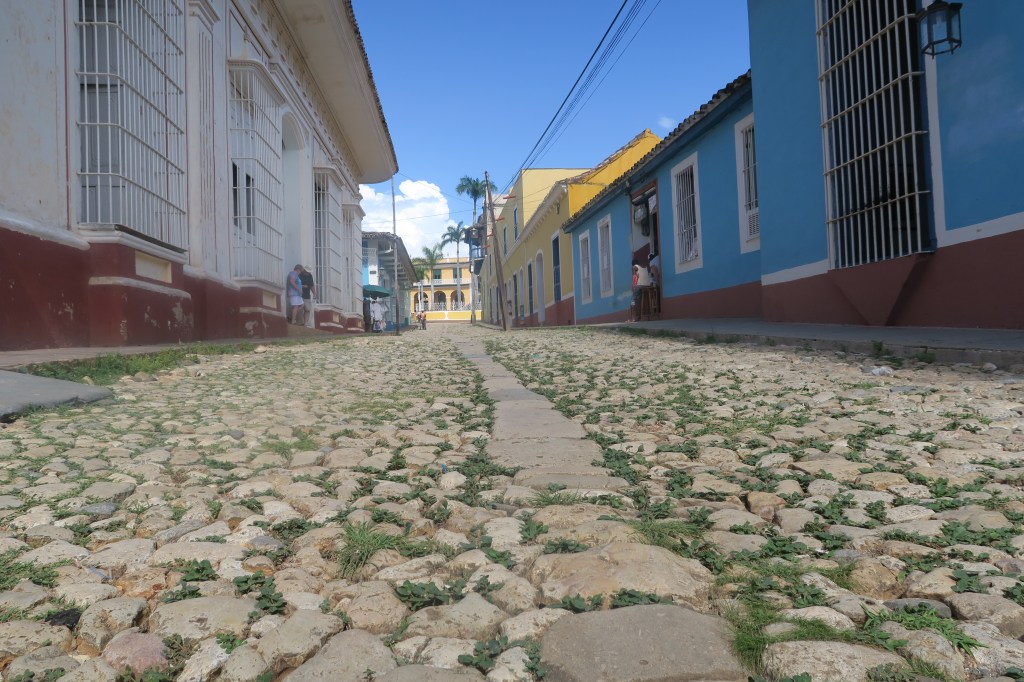
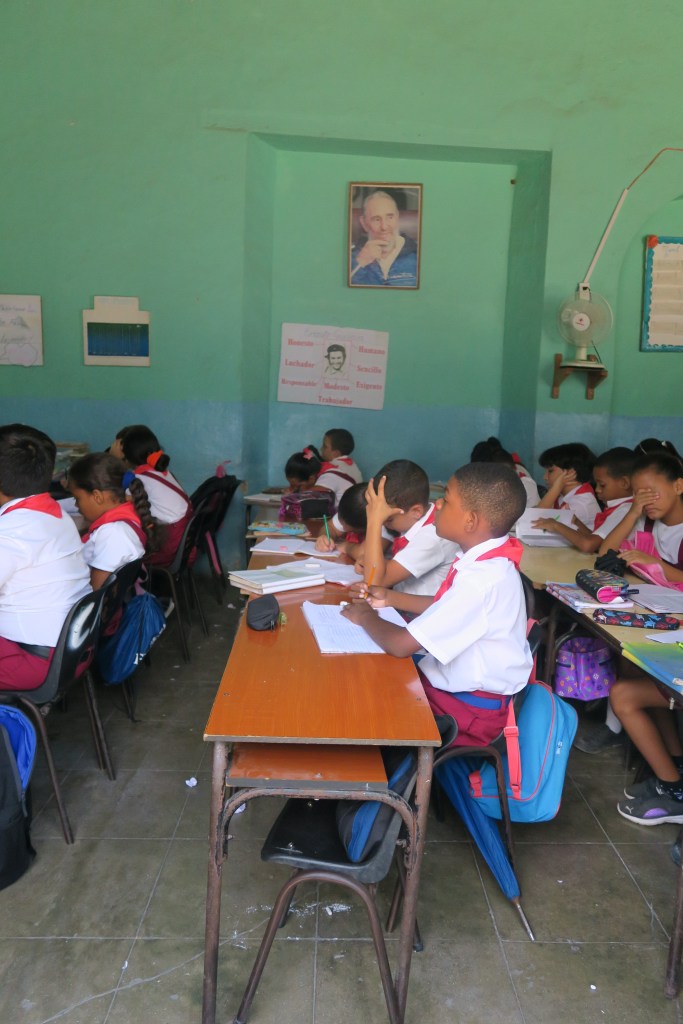
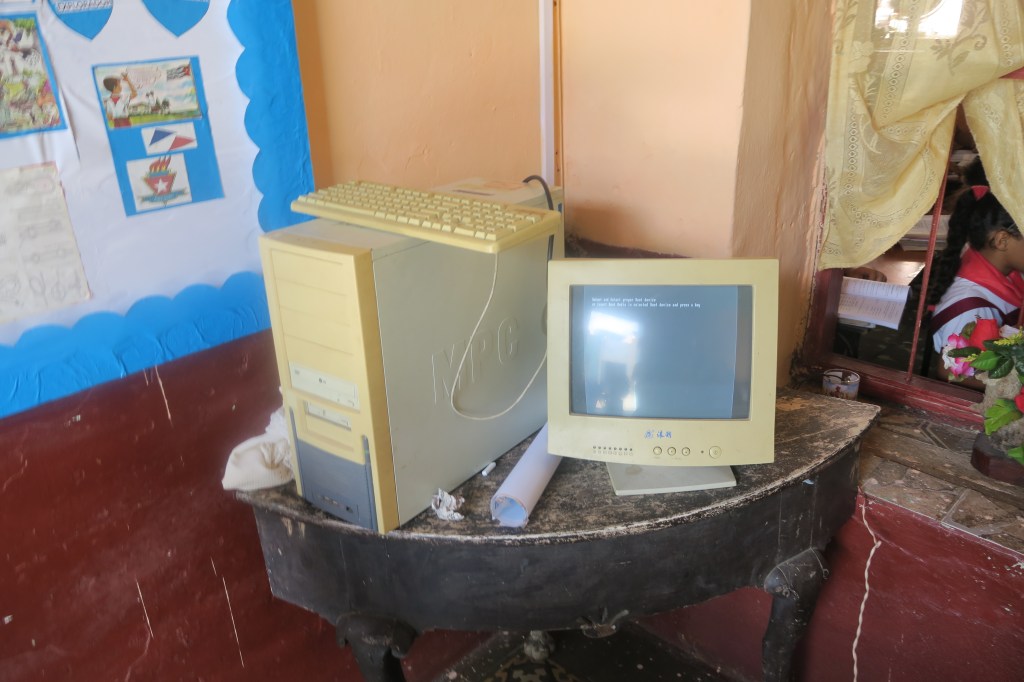
As we walked through the town it soon became apparent that our guide knew just about every one of the 78,000 residents here, stopping to say hello as he showed us the sights. He spent 10 years as a schoolteacher so many of his students still live here. We stopped by a school and got to take some quick snaps. The gave us coffee and I gave them my swag of hotel pens that I’d pilfered. Schools like this always need practical help. They don’t have the benefit of technology with their one computer being something I haven’t seen in a long time.

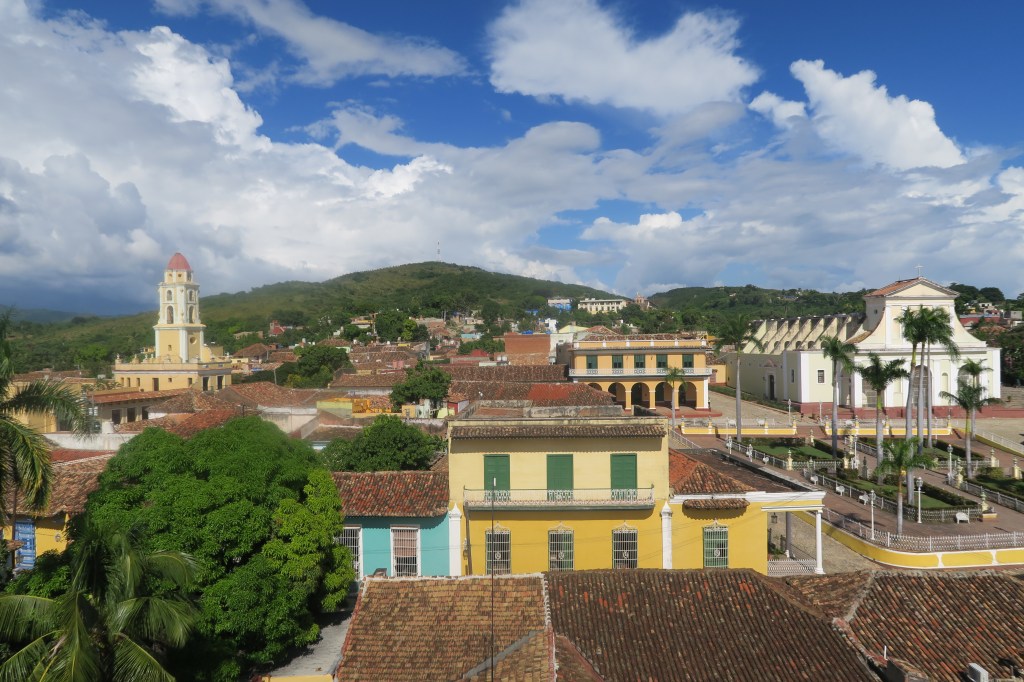
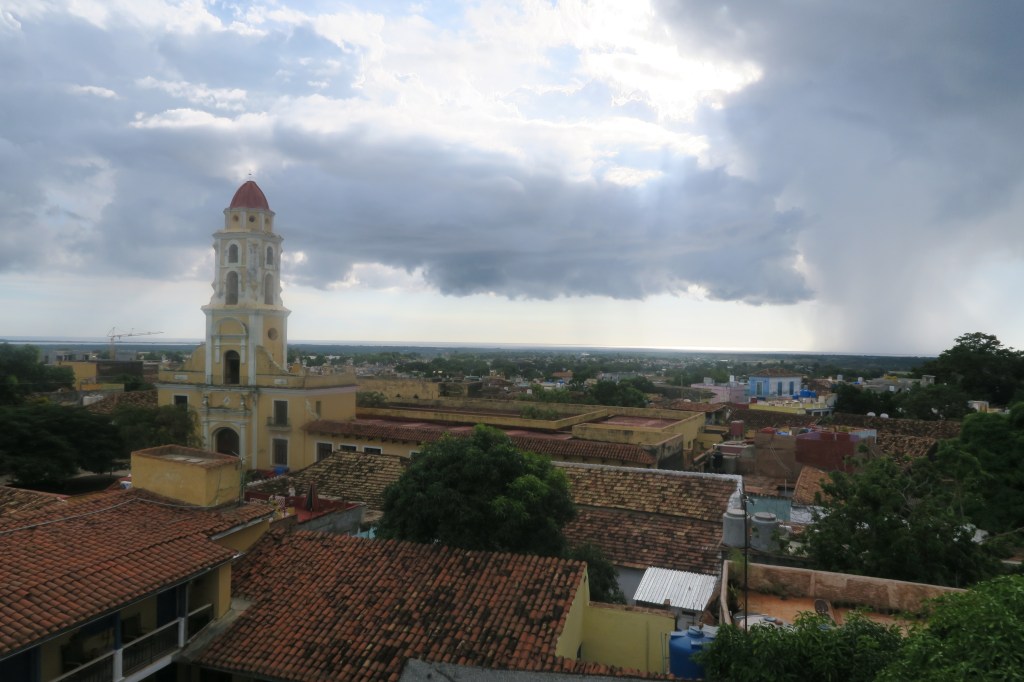
Trinidad is really trying to put itself on the tourist map and the town itself is quite eclectic with lots of galleries and museums, most of which have some narrow stairs (not built for mas grande personas like) but are worth the climb for the photos. Additionally, they are building a restaurant trade and the restaurant we went to dinner at was the best food we’d had since arriving in Cuba. Deb had Lobster and I had a beef fillet, both of which were very good. The other nice thing about Cuba is that there is always live music at every meal which of course costs a tip… like everything here.
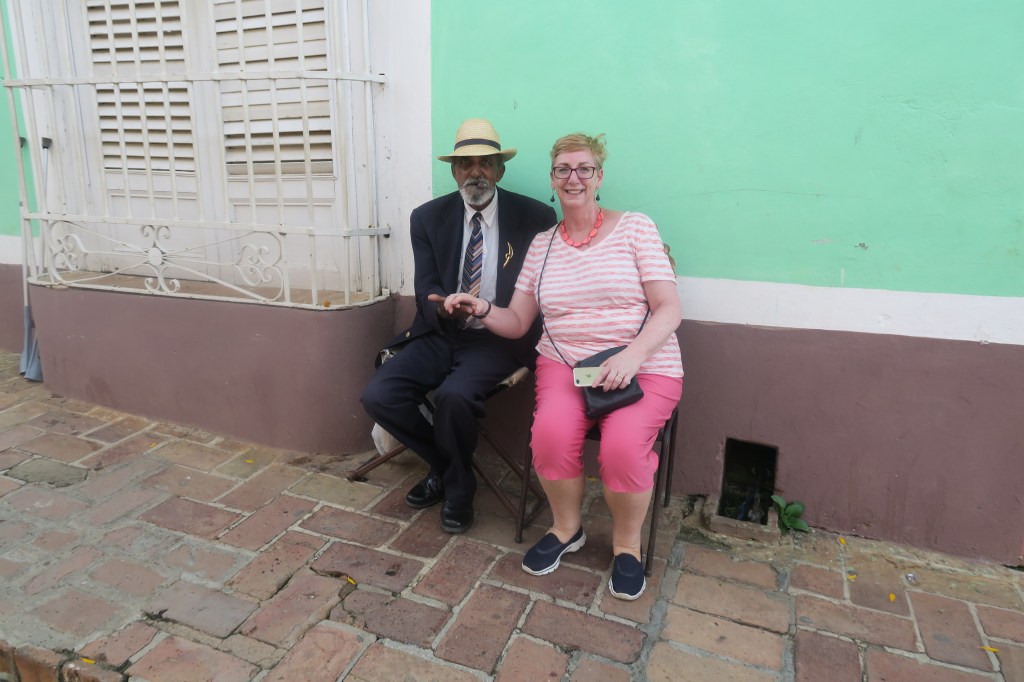
I’ll leave you with one last picture of Deb getting out and mixing it with the locals. This particular gentlemen is reputedly quite famous in Cuba for attending all the Cuba baseball games and getting himself on camera.
Until tomorrow!

 Rob's "Beats Working" Blog
Wow, I’m getting quite the education on Cuba. Holy moly.