
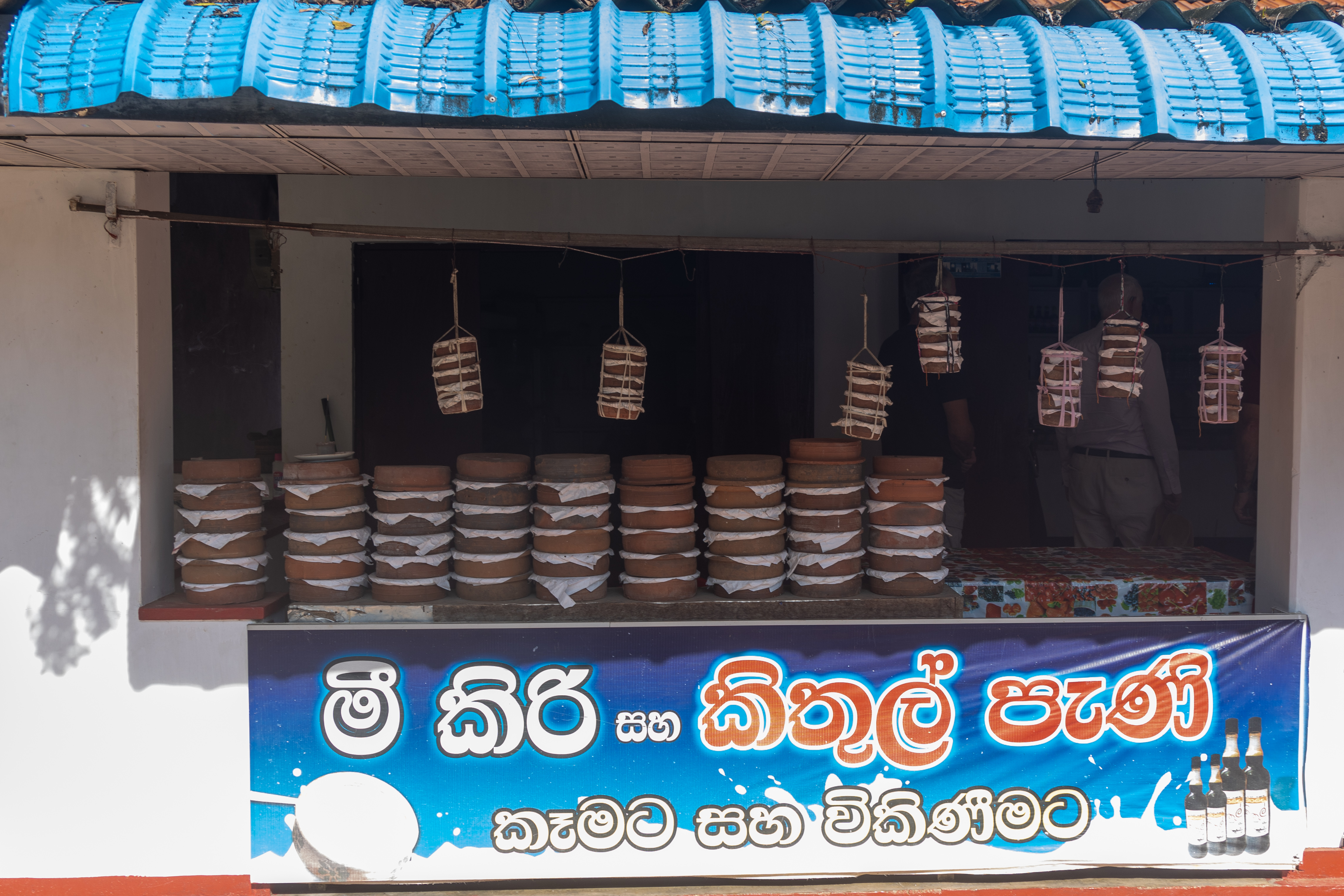
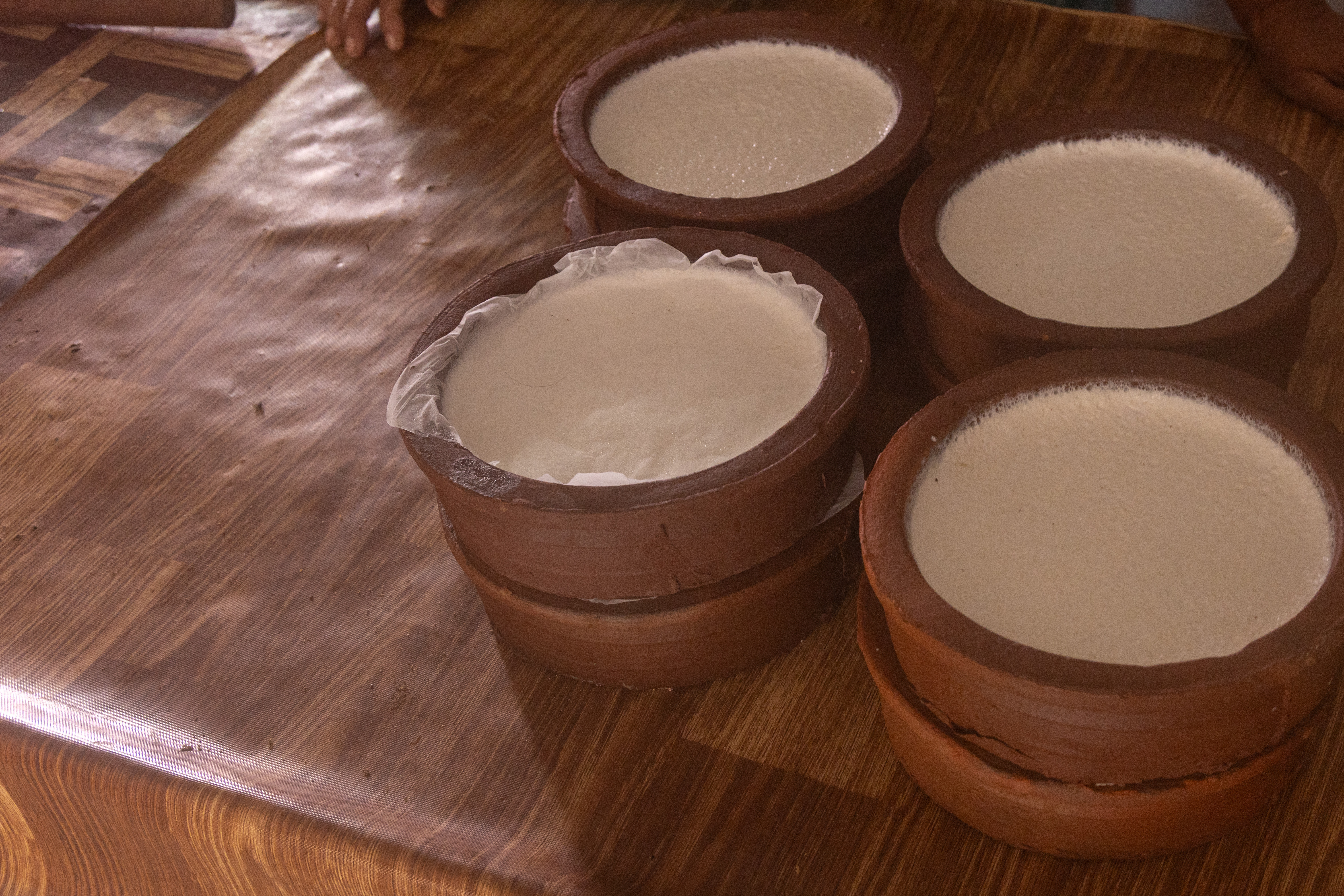
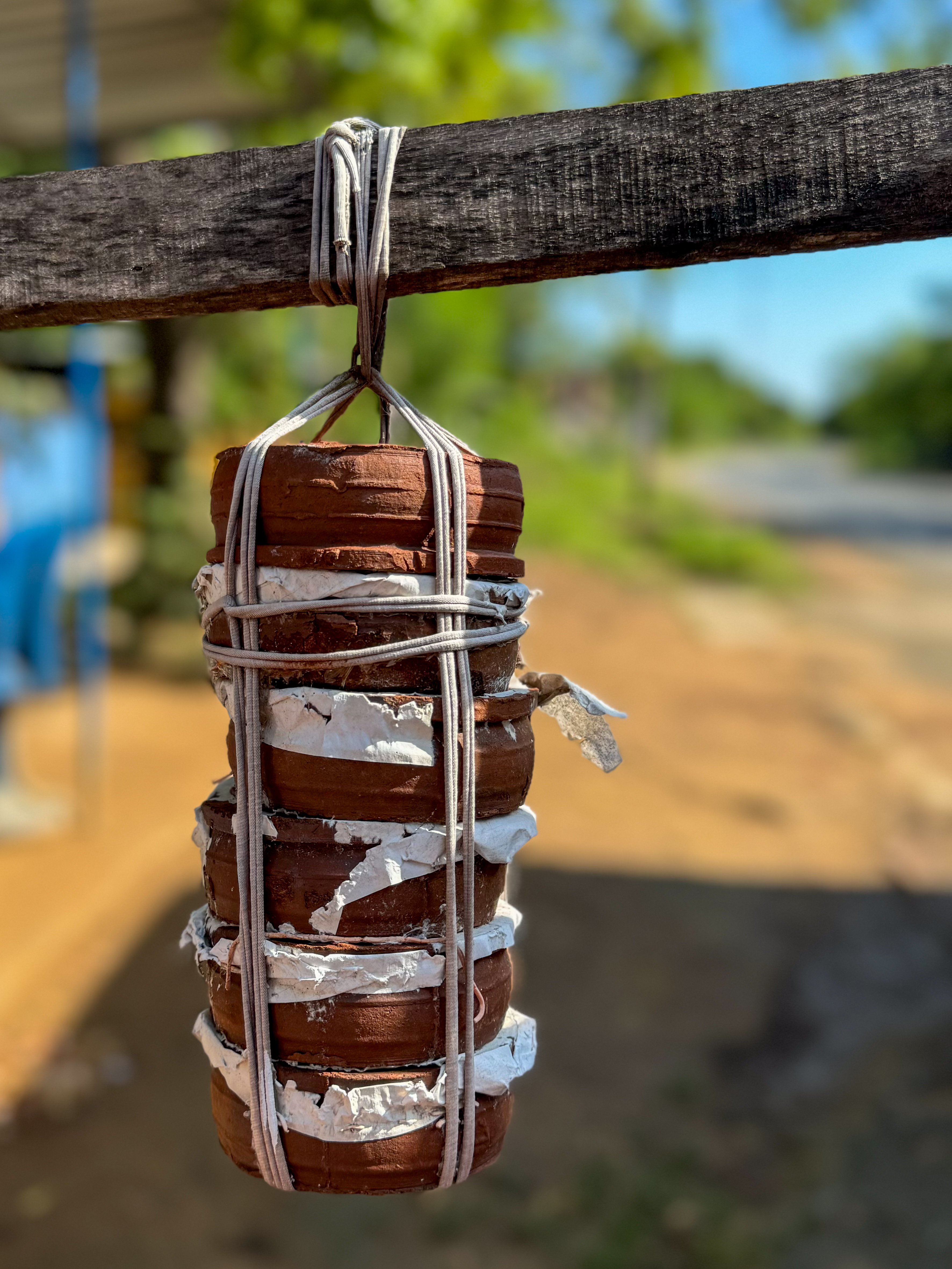
Today we had an 8:30 departure time, which seemed much more civilised than that pre-dawn start of yesterday. Deb and I both slept like logs. We were making our way to Galle today, on the south-east corner of the island. As we left the hotel we were pretty quickly on the highway and our first stop was at a shop that makes Sri Lanka’s favourite desert, buffalo milk curd which is a traditional type of yogurt prepared from water buffalo milk. It is usually packaged in clay pots and has higher amounts of protein, fat, lactose, minerals and vitamins than cow’s milk. The quality of the curd depends on the starter culture. Fermentation also develops the characteristic flavor and colour of the product.
Buffalo curd is traditionally made by filtering and boiling the milk, prior to being cooled to room temperature. A few spoonfuls of a previous batch of curd are added and it is then mixed well and poured into clay pots. These are sealed by wrapping a piece of paper over the pot and allowing it to stand for 12 hours.
We were soon at Hambantota, which has seen much development in recent years since being largely devastated by the 2004 tsunami. Much of the investment has come from China. There is an International Convention Centre that was completed in 2014, but has sat largely unused. A local port was established that has the capacity to be the largest in South Asia, but due to poor patronage, the debt was exchanged for a 99 year lease with China. The motorway that we drove on was also a China-financed project. It was a great road that is elevated well above the the floodplain and future tsanami events. It is also free of mopeds and tuk-tuks, but didn’t seem that busy.
At the end of the motorway, we were back among the more normal roads. We had decided that we would spend some time at Mirissa Beach, a small town on the south coast of Sri Lanka. Mirissa’s beach and nightlife make it a popular tourist destination. It is also a fishing port and one of the island’s main whale and dolphin watching locations.
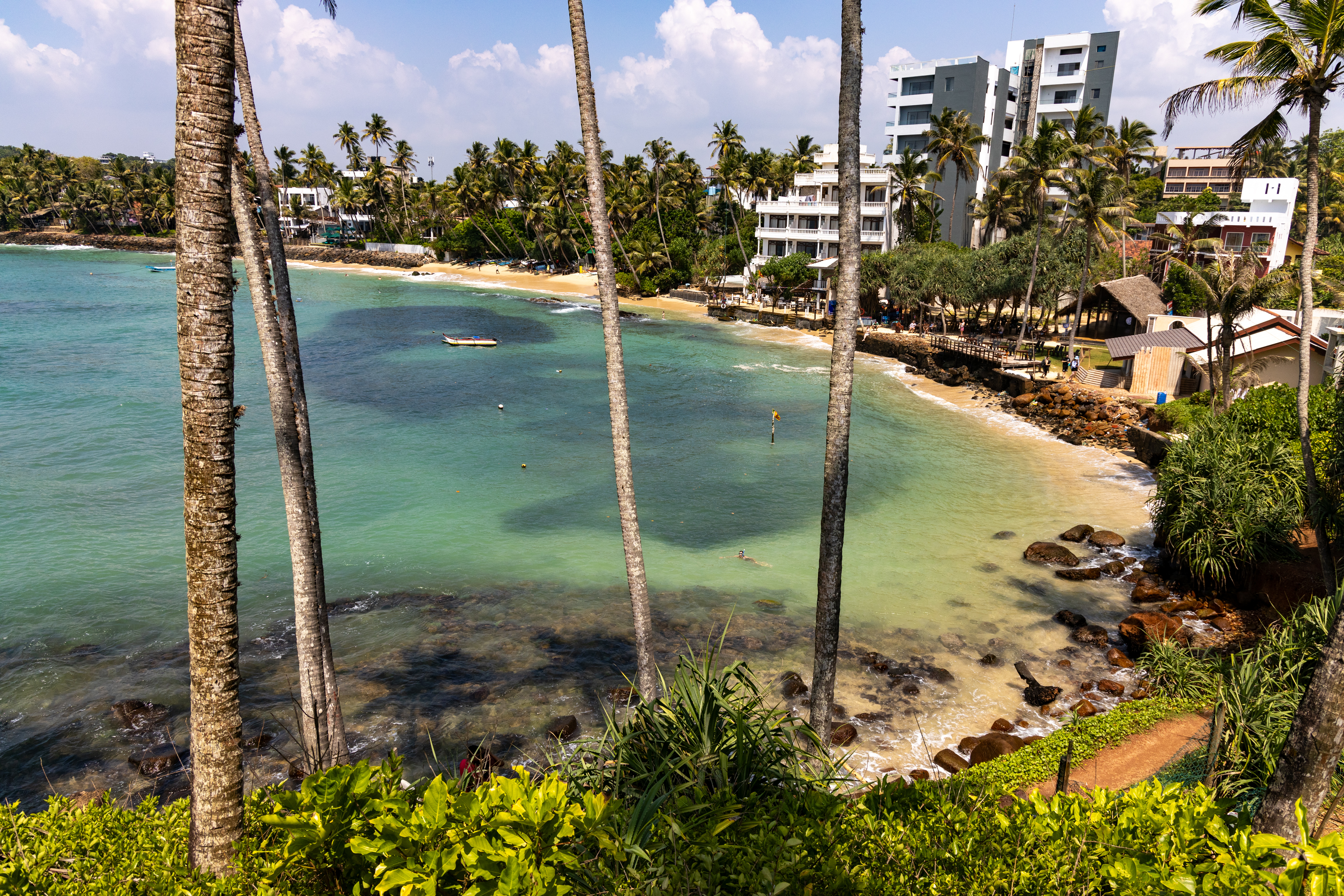
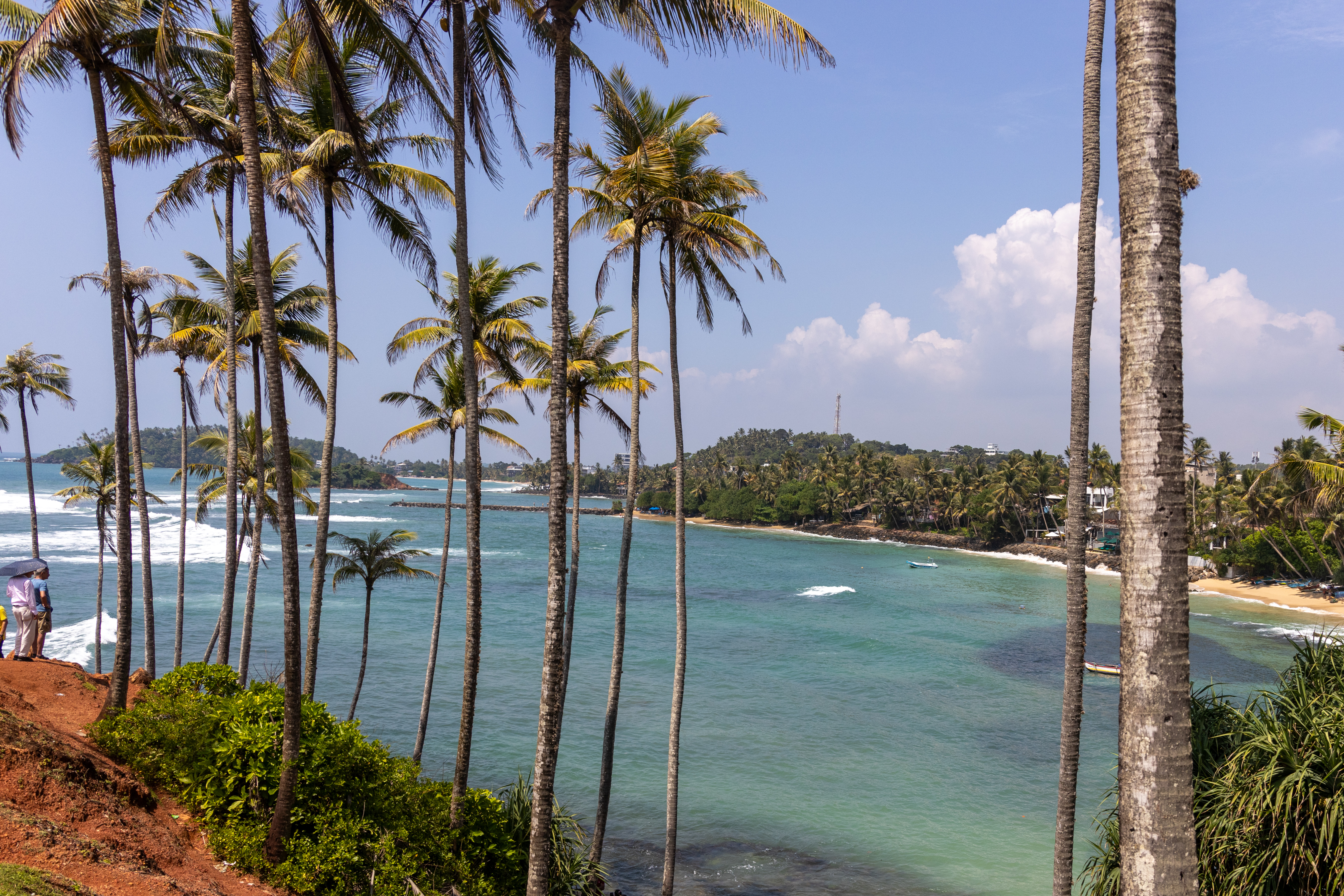
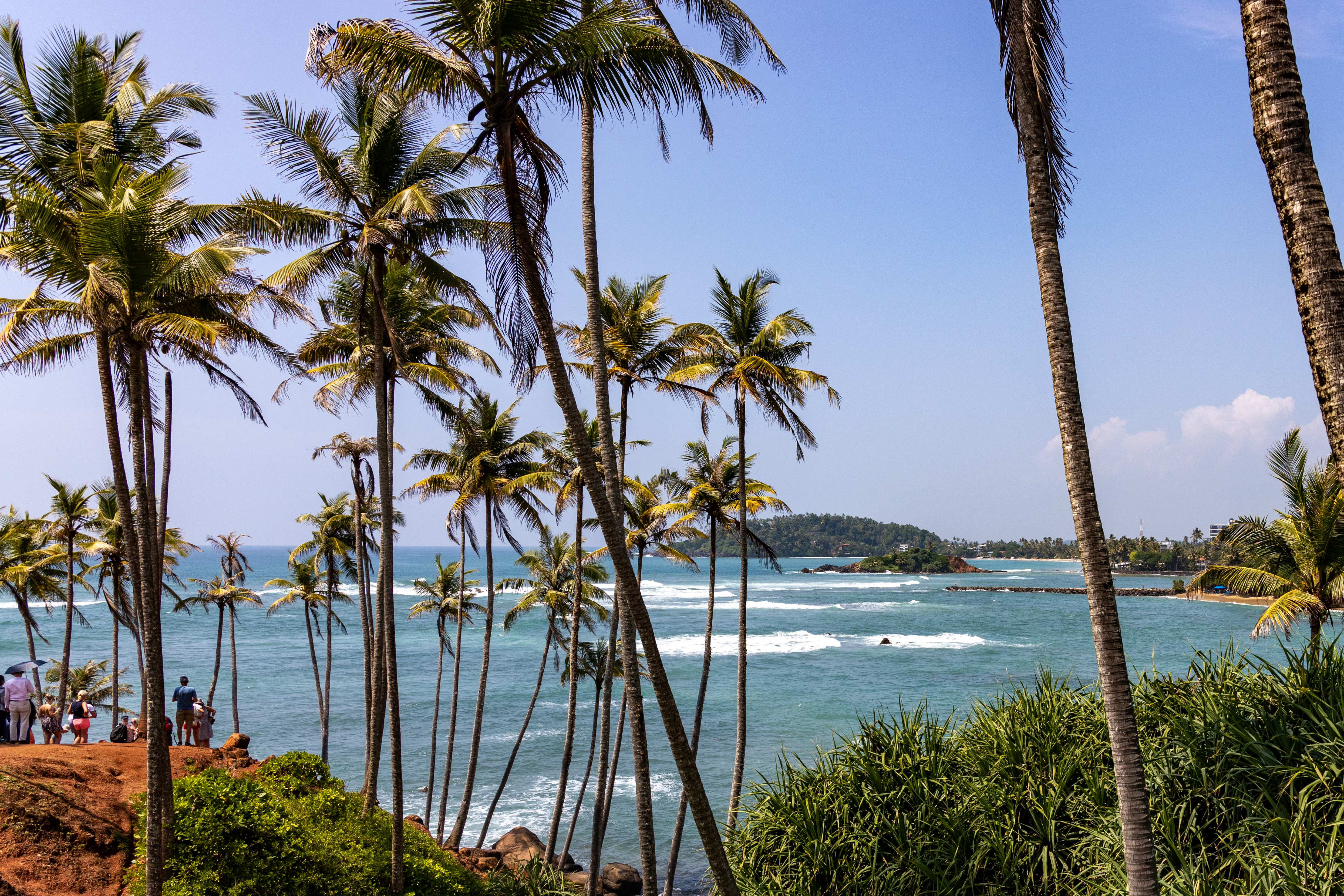
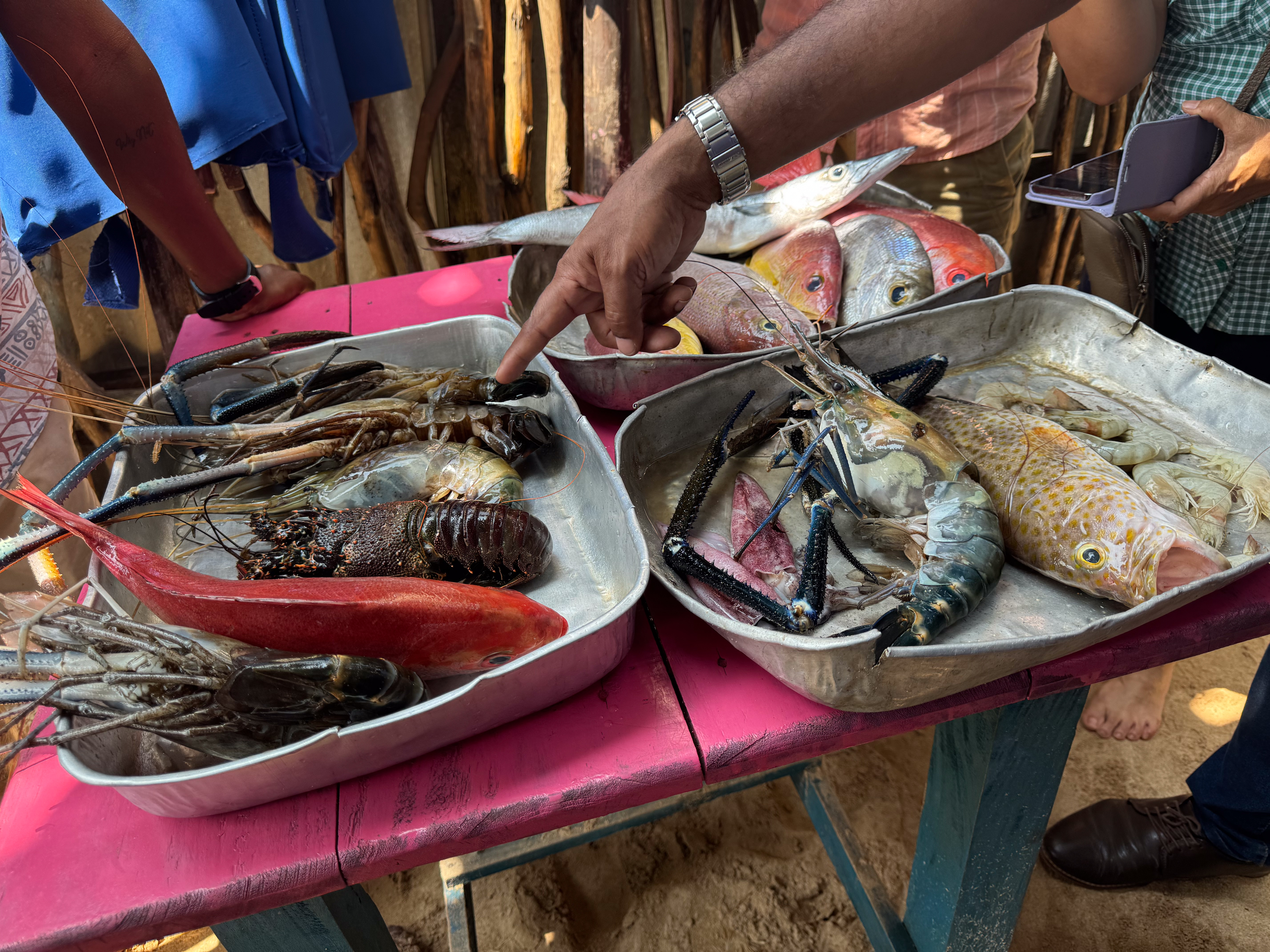
Mirissa Beach is considered one of the best beaches in all of Sri Lanka. After taking the above photos from Coconut Hill, we stopped at a restaurant on the beach front where we could have a drink and some food. Some of us went for a swim in the surf, but the waves were powerful and there was a strong undercurrent. It was no place for the inexperienced surf swimmer. Once the swimming was attempted it was time to order a seafood lunch. We chose a meal from a collection of fresh seafood, opting for a snapper and a giant prawn, that looked a lot like a small lobster. The food was well cooked and it was very relaxing to be eating right on the beach.
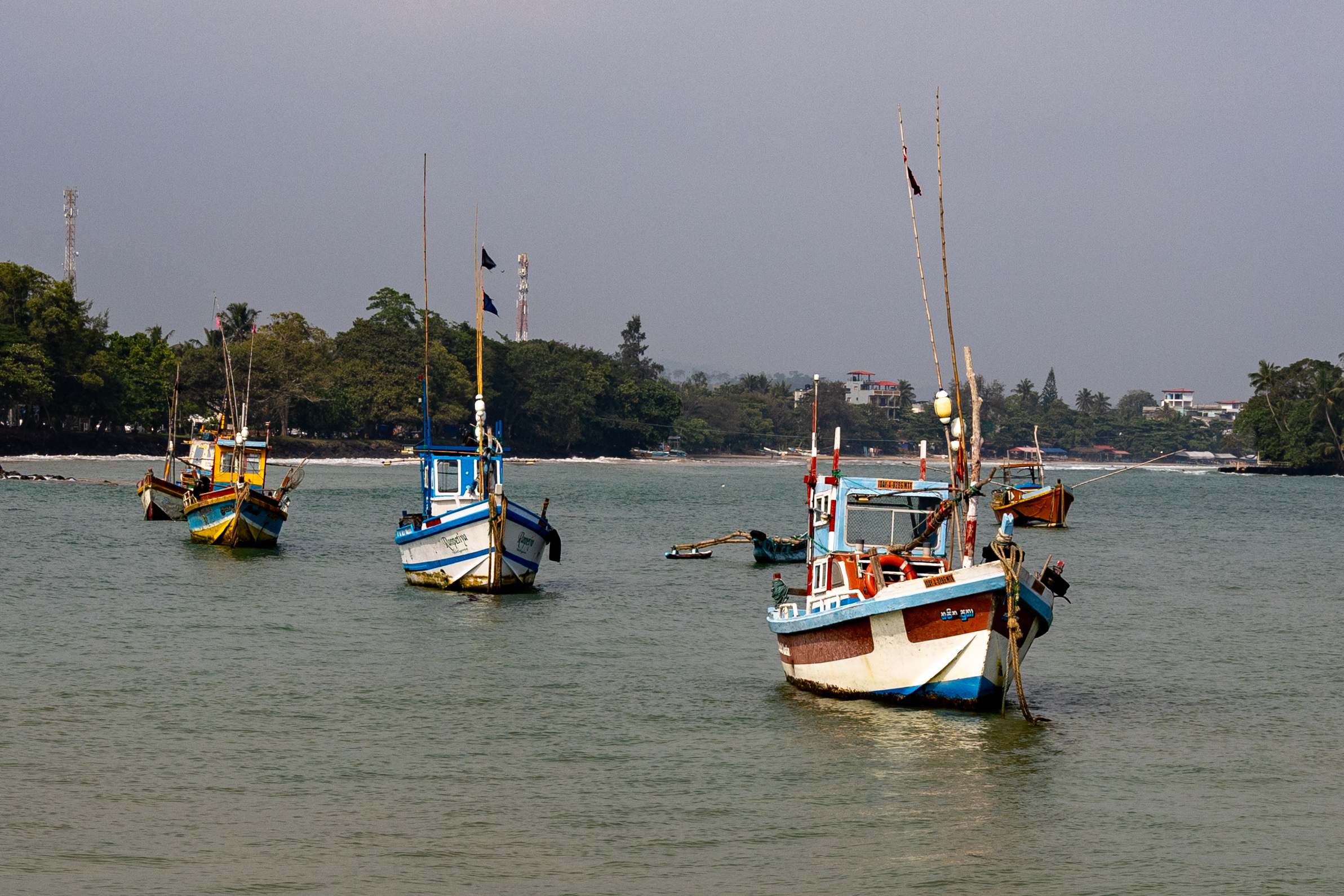
From there we took the scenic route along the coast. This area has always been driven by fishing. We passed by a number of fishing spots and a significant fishing boat dock. Like the boats in Negombo, they probably don’t pass Australia safety regulations.
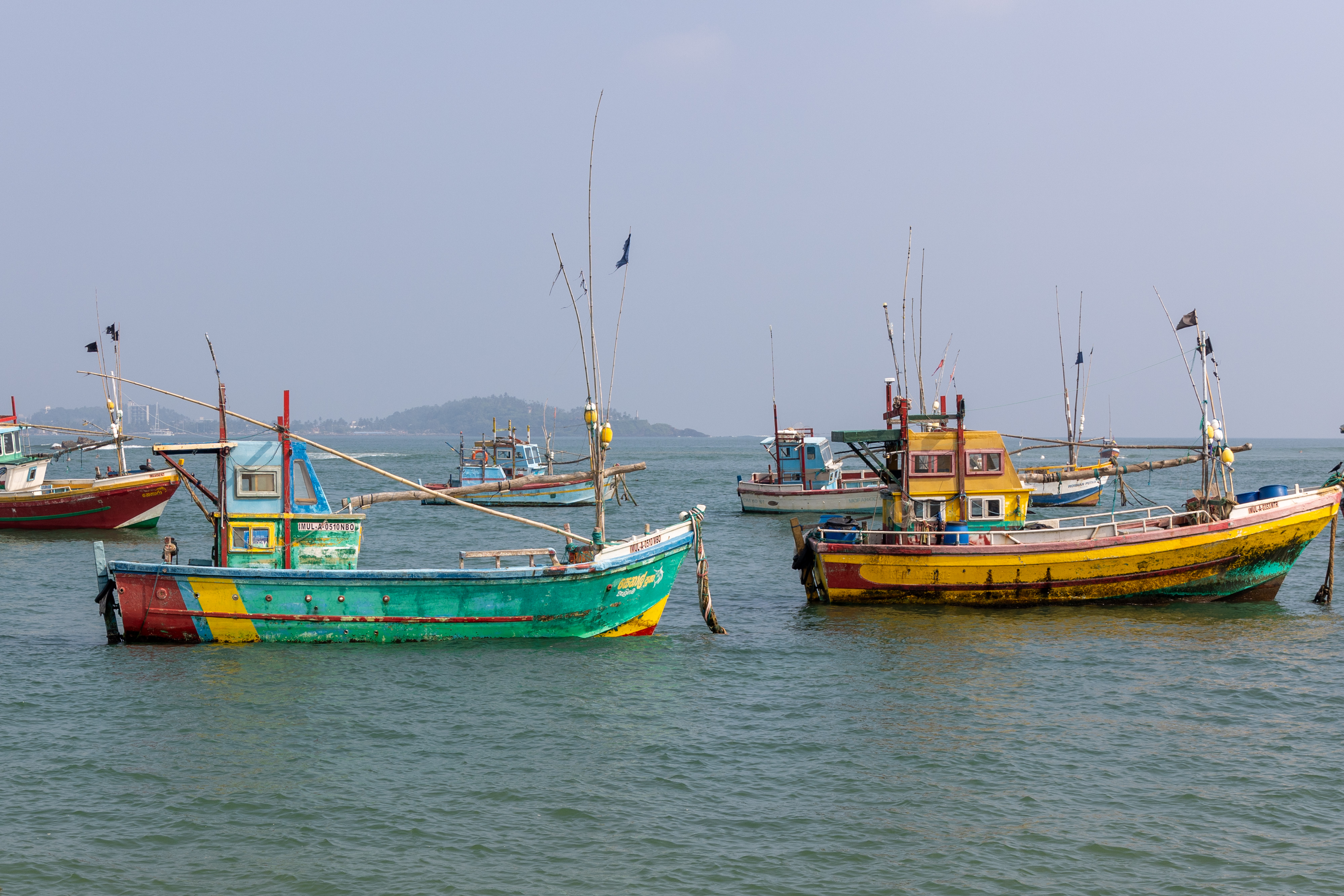
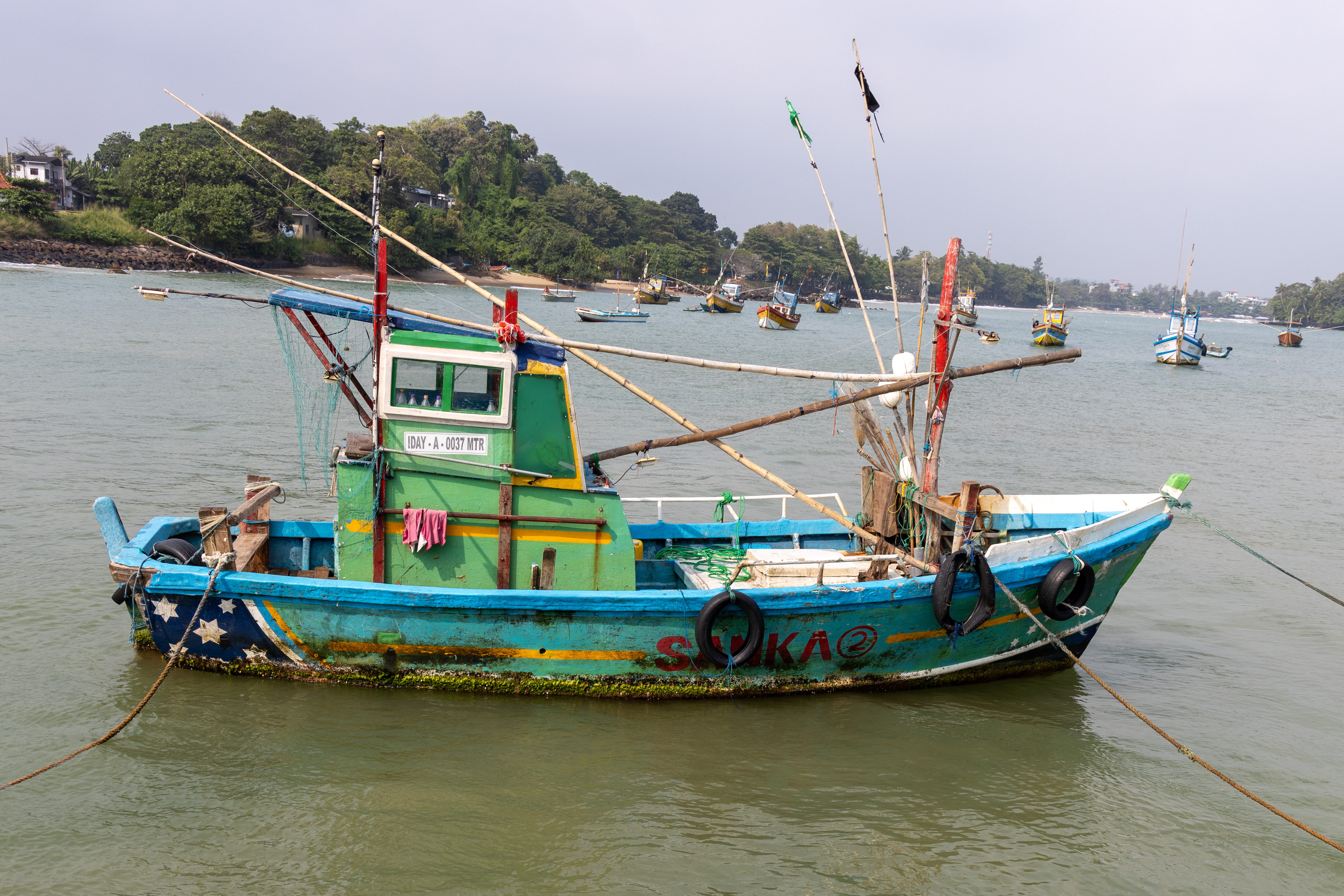
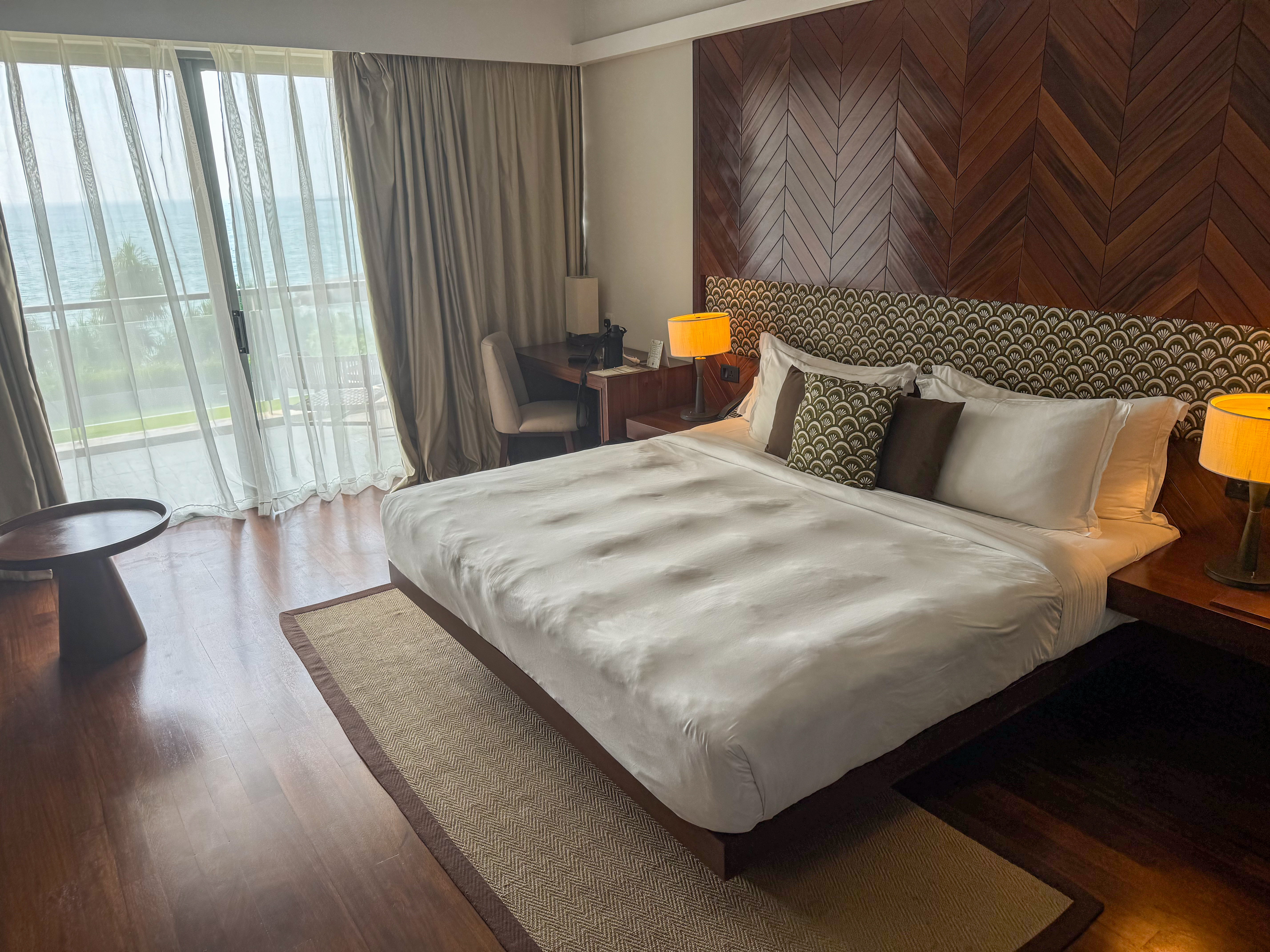
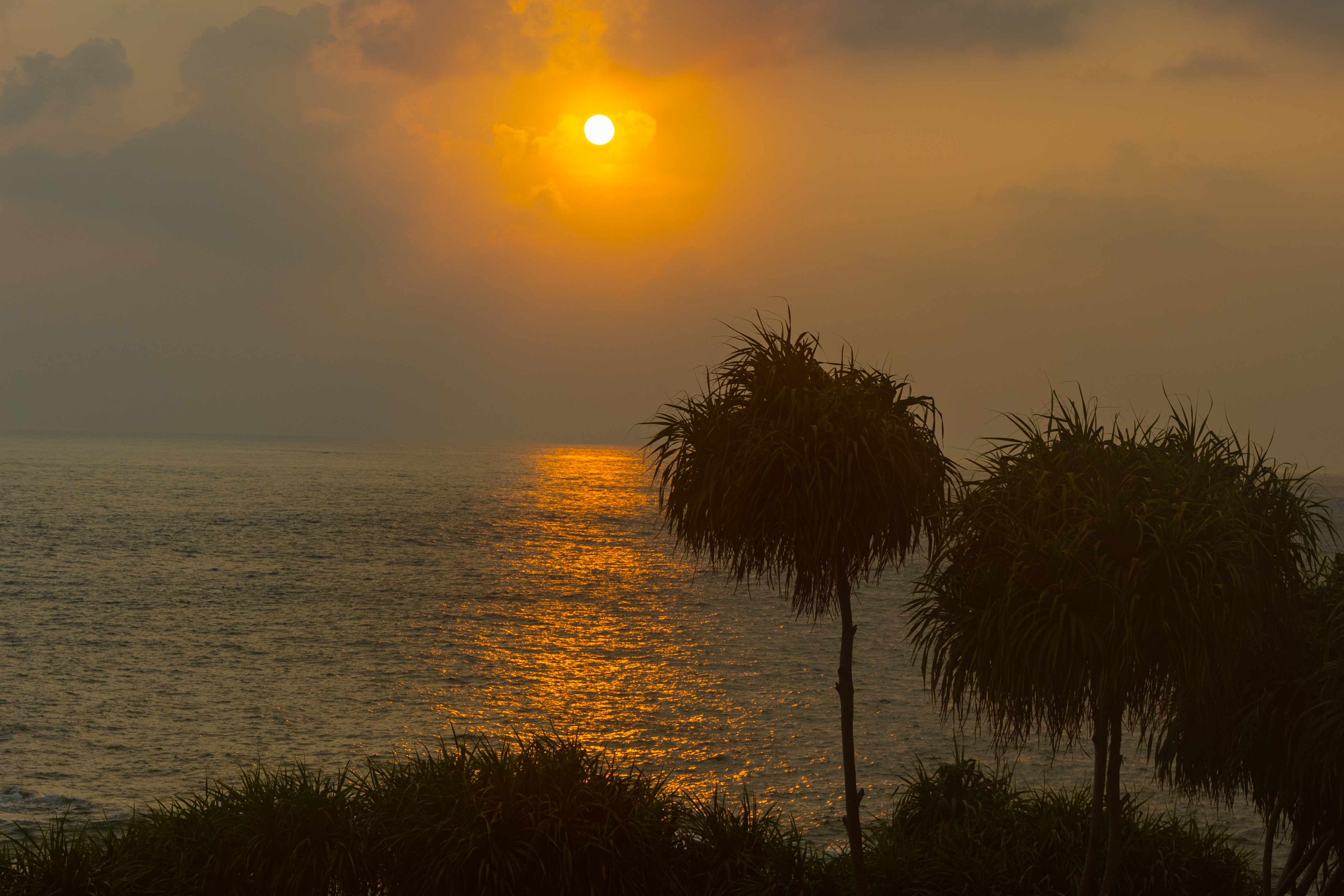
Soon we arrived in Galle a city that was also devastated in 2004. It is believed that up to 11,000 people died as a result of the tsunami. Our hotel here is magnificent and we helped ourselves to a quick swim in the pool upon arrival.
Our last activity for the day was a visit to a local home to cook some local cuisine. This essentially meant that they would provide all the ingredients and then help us cook an amazing meal. I helped cook a pumpkin curry and made the coconut sambal using and old-school Mortar and Pestle to crush all ingredients. The meal turned out well and it was definitely a fun way to learn about Sri Lankan cooking.
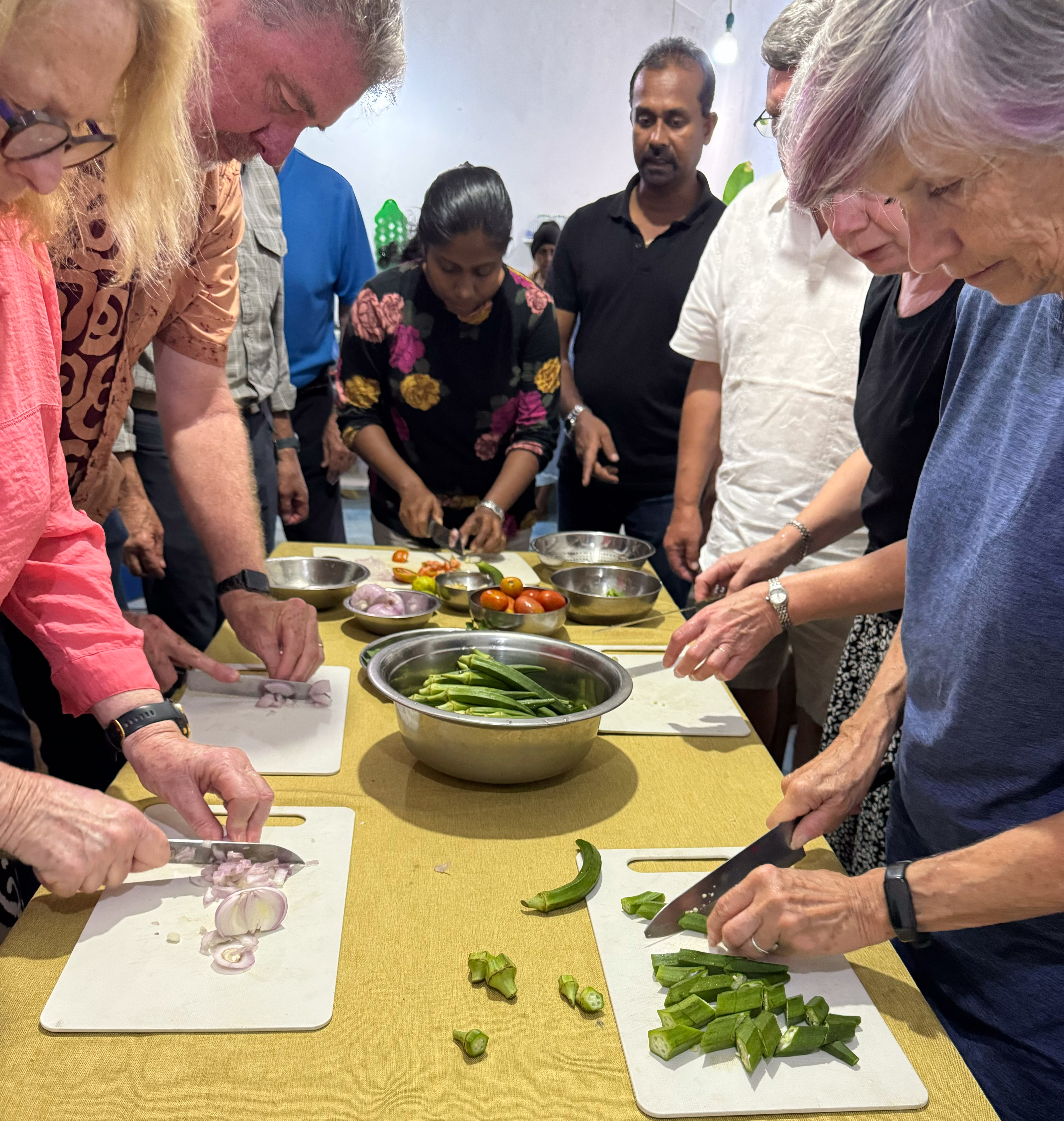
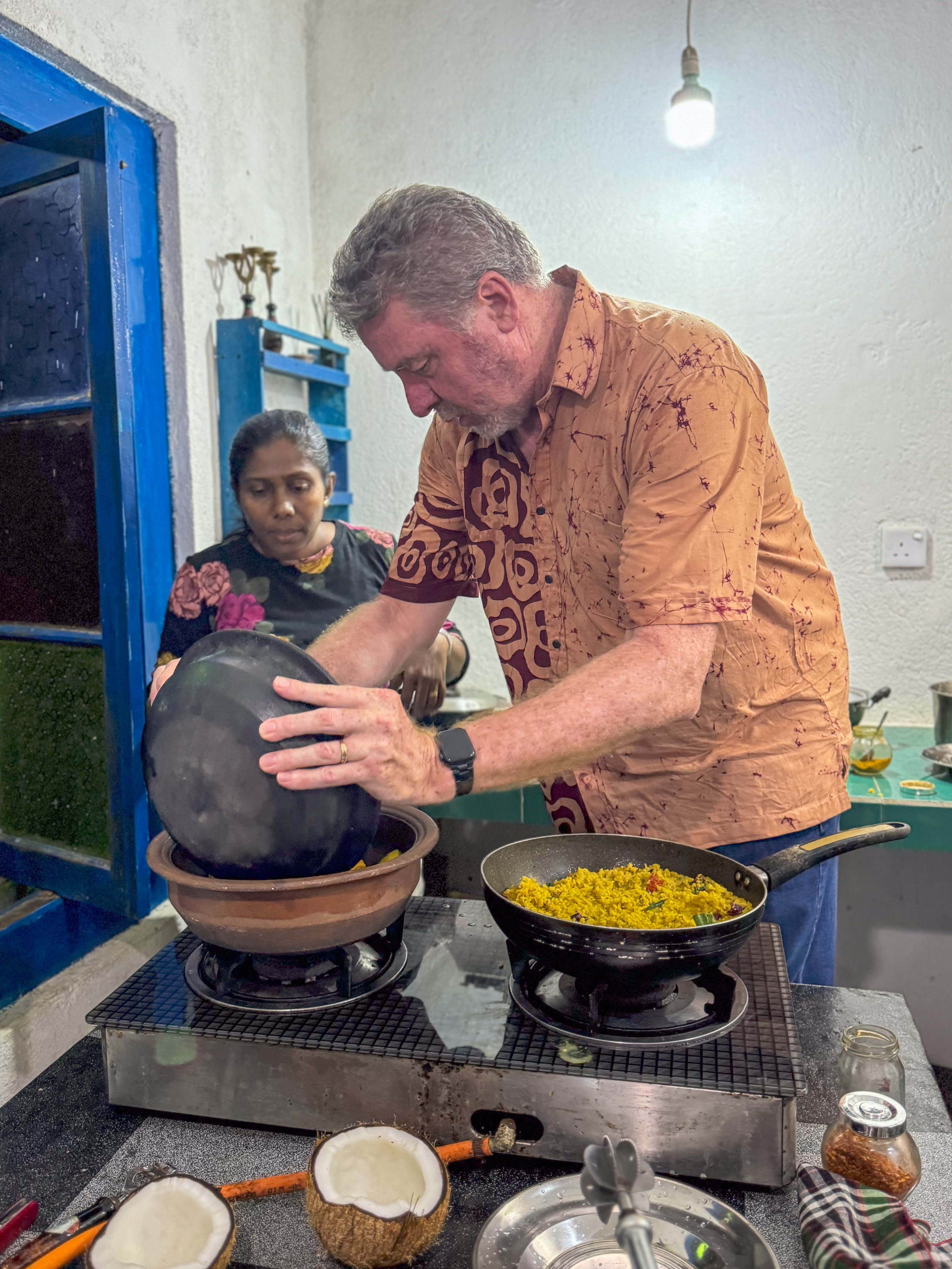
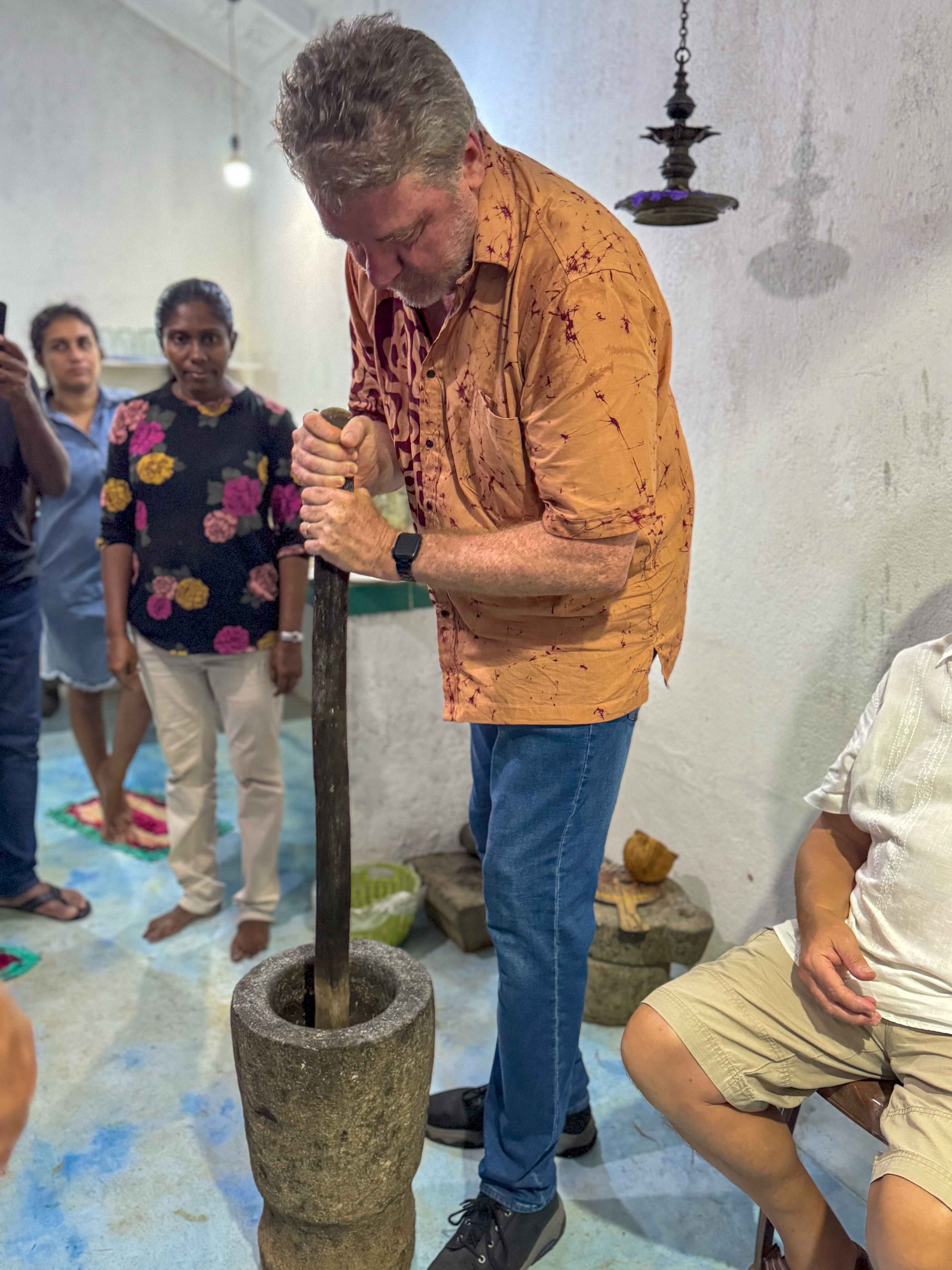
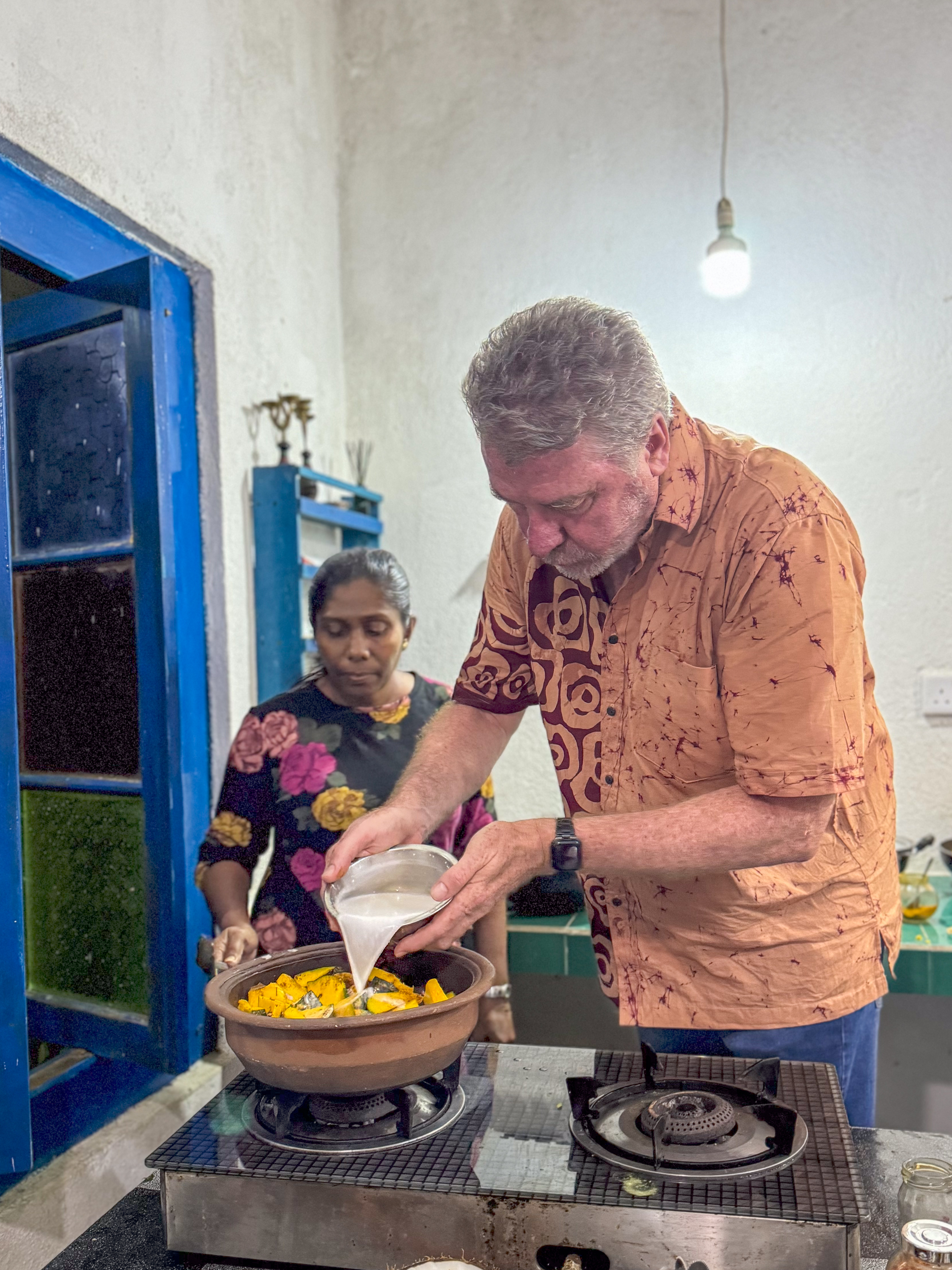
We then got to eat a fish curry, pumpkin curry, dal, vegetable curry with red rice and coconut sambal. Of course we finished with the Sri Lankan dessert of Buffalo Curd and Treacle.
Until tomorrow

 Rob's "Beats Working" Blog