
Today was a bit of a traveling day as we make our way into the heart of Sri Lanka’s tea producing areas. Breakfast was our last meal at the Grand Kandyan Hotel as we all checked out and boarded our bus. As usual the Intrepid crew had all the bags loaded and we were ready to go.
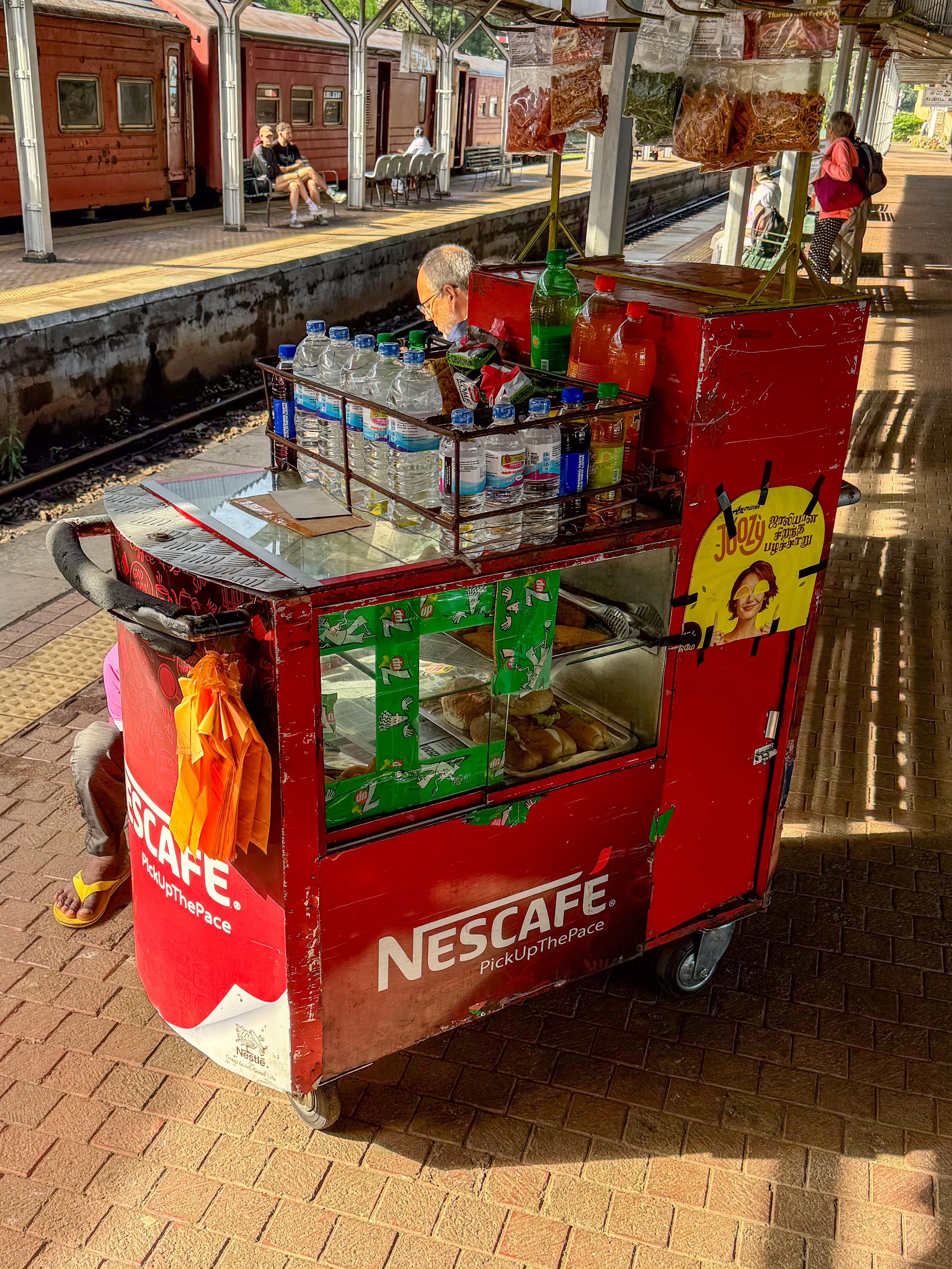
Today’s plan is for us to take the train as part of our transit plan to Nawara Eliya. The Kandy train station had an a real old world feel to it in comparison to the metro train services that I am used to, but it did have a coffee cart, of sorts. I didn’t try the Nescafe as I feel it would most likely offend my coffee tastes. I think takeaway coffee is one thing we do well in Australia, but we do pay a lot more.
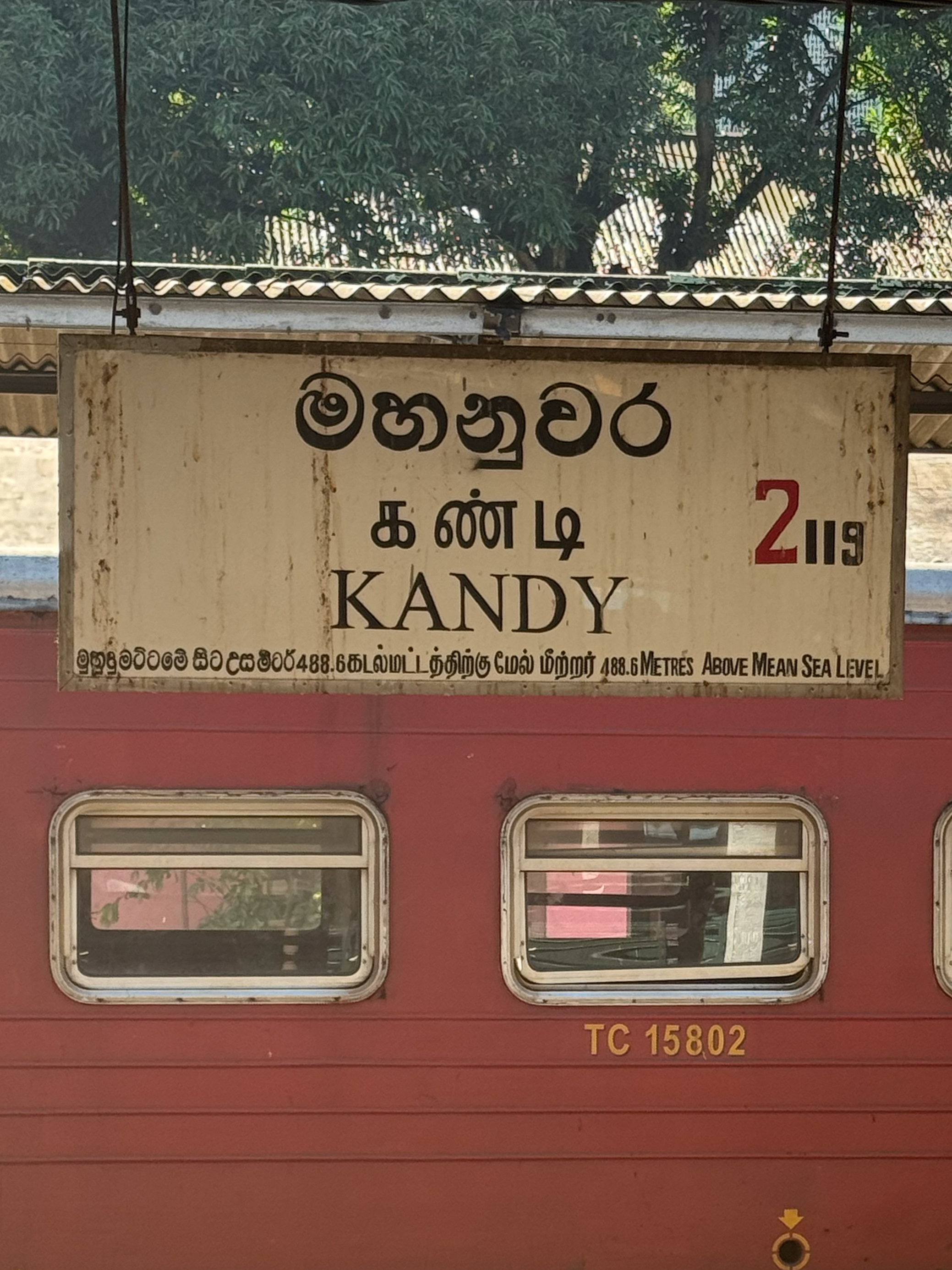
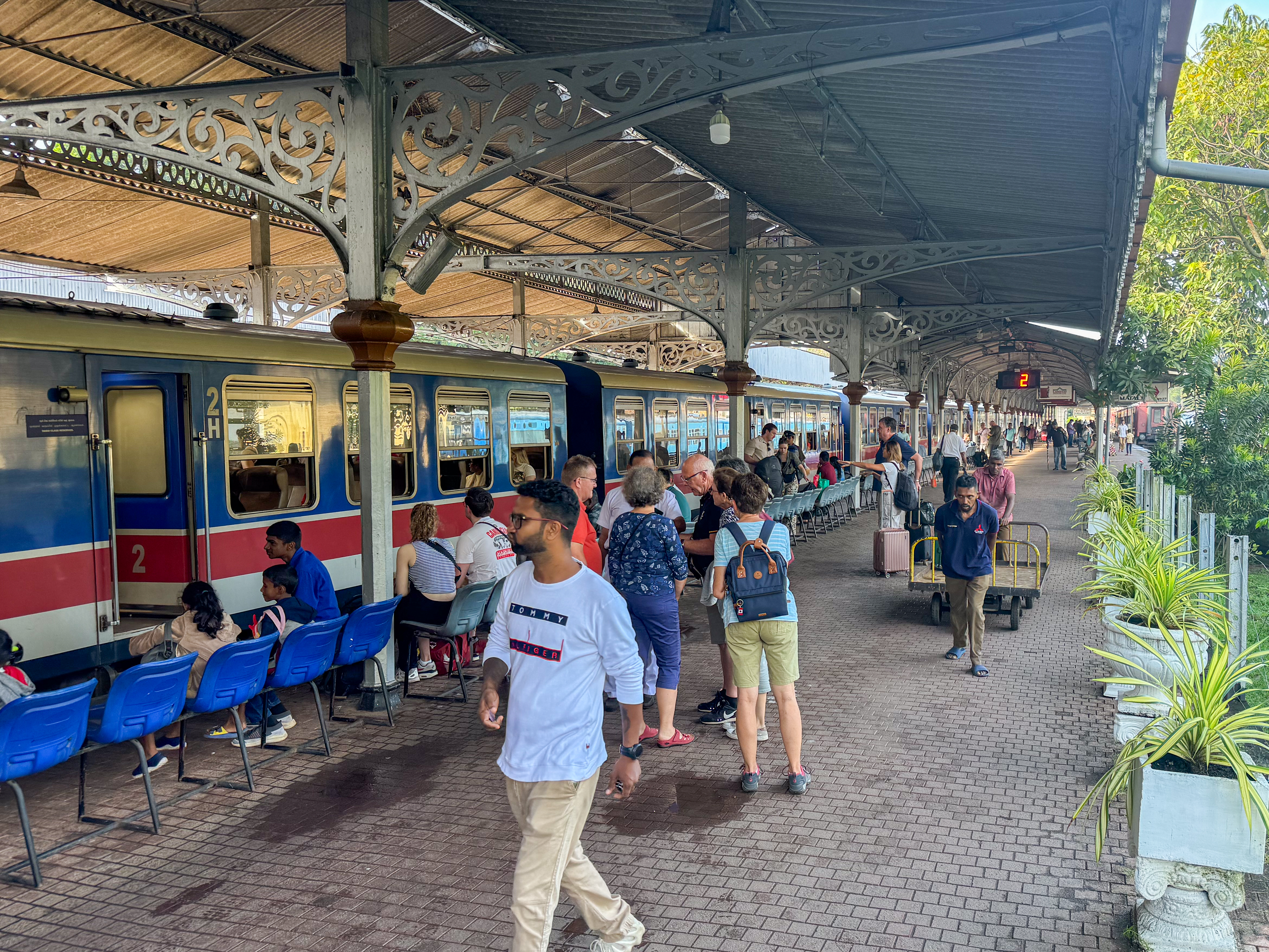
Our train was a bit late in, which I understand is not a rare occurrence. Our train followed the Main Railway Line from Kandy which then continues to climb through tea country, connecting local market centres at Gampola, Nawalapitiya, and Hatton before reaching Nanu Oya. This is the connection to our planned destination, the former colonial resort town of Nuwara Eliya, known for its temperate climate, classic hotels, and British-style gardens. The Main Line was extended in stages with service to Kandy beginning in 1867, to Nawalapitiya in 1874, to Nanu Oya in 1885.
The scenery is quite spectacular with deep valleys and more and more tea plantations as the altitude increases. It doesn’t seem to matter where you are in Sri Lanka there is always a cricket game somewhere.
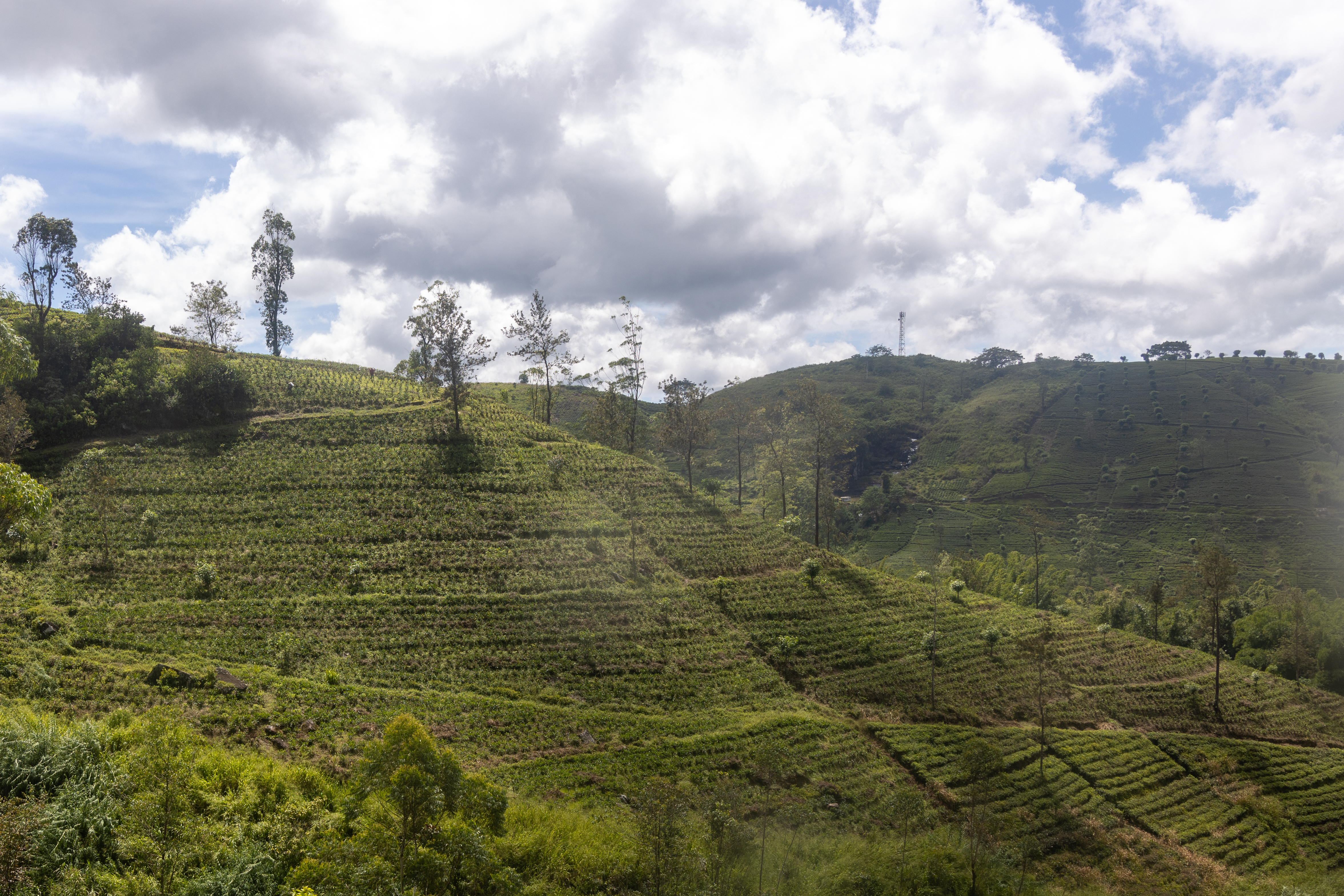
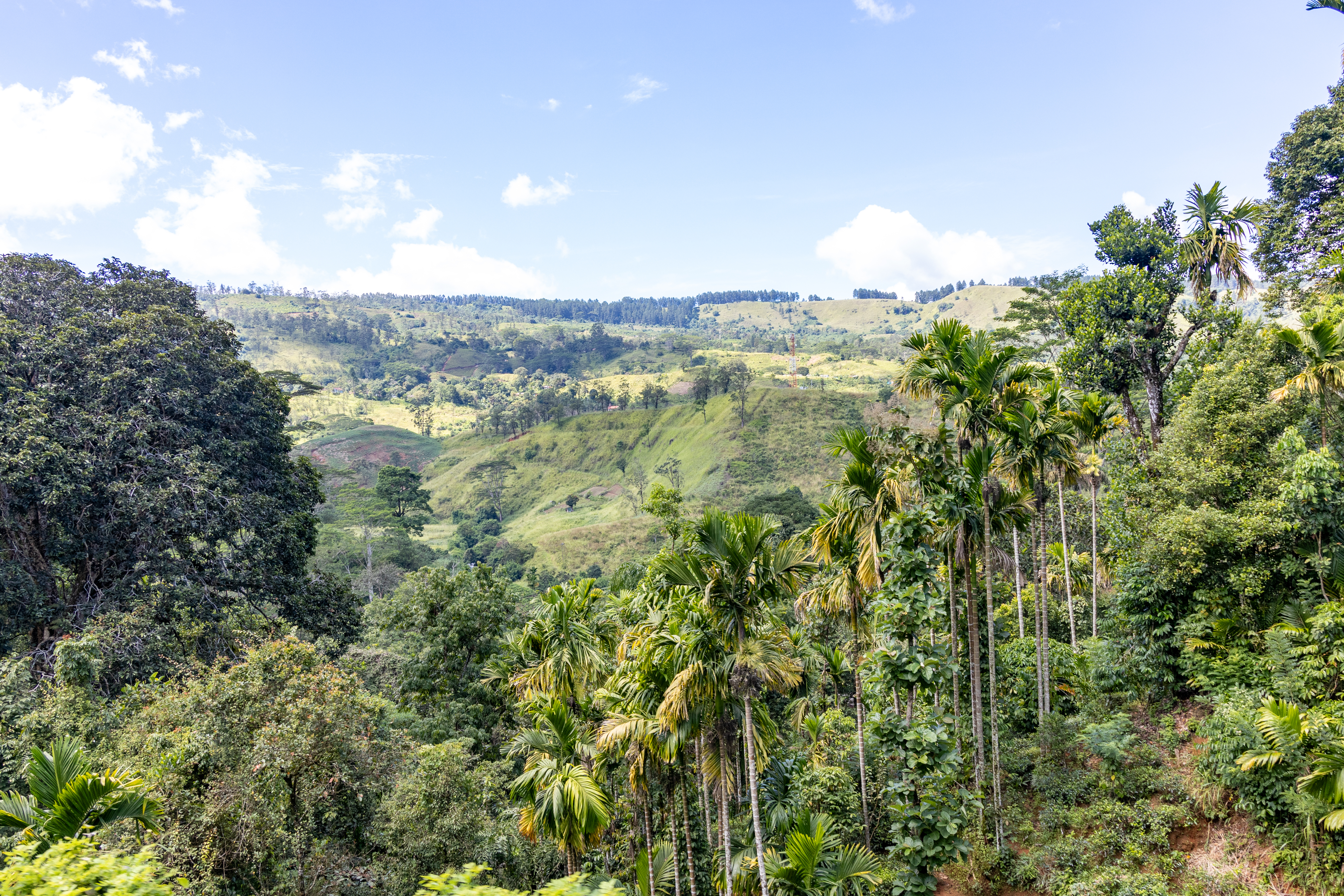
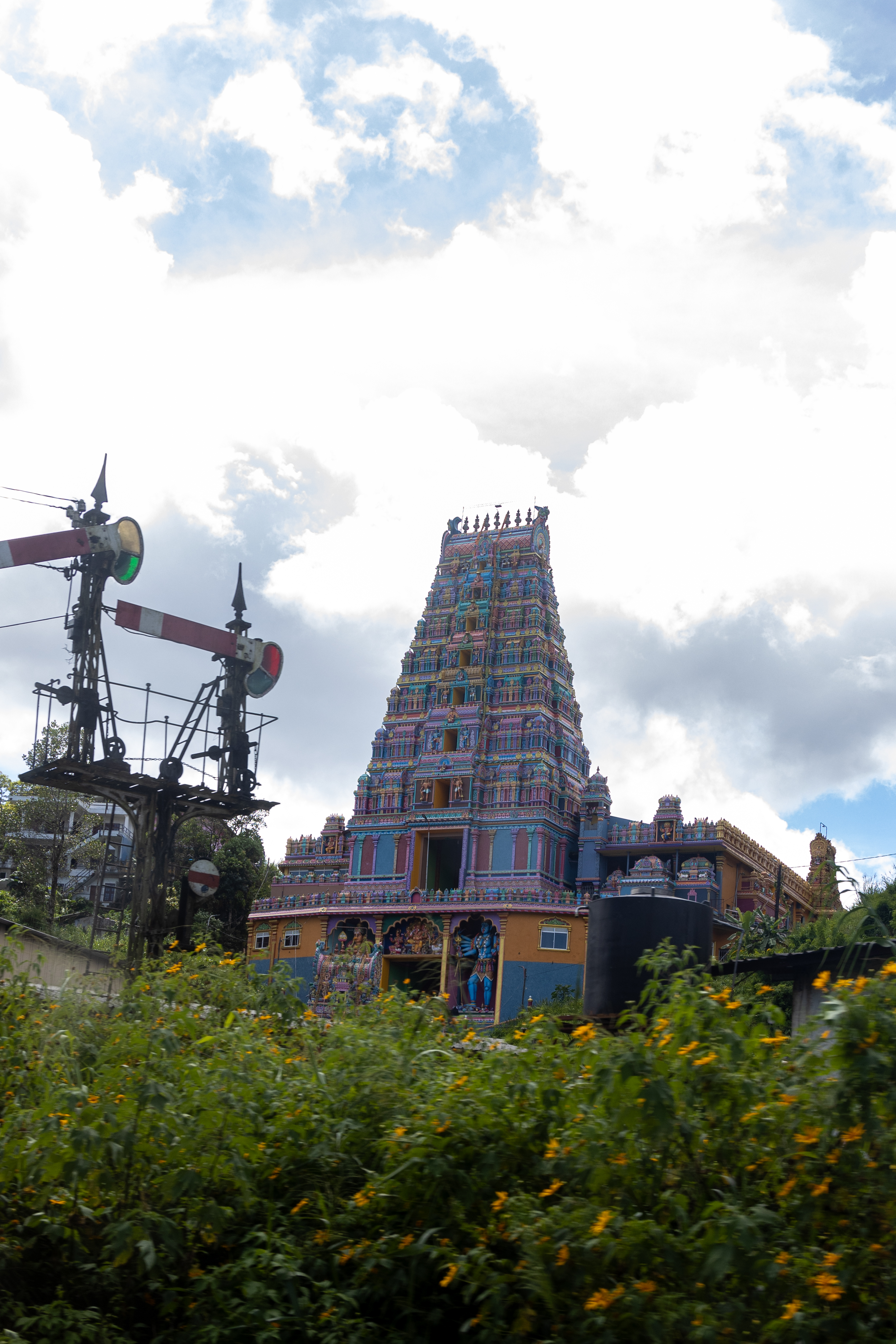
We met up with our bus in Nanu Oya, where we vacated the train. The Nanu Oya railway station is the 63rd station on the Main Line, and is just over 200 km away from Colombo. Many of the main express trains service the station. The original train station was built in 1885 as the terminus of the main line. Added to the tea plantations the line wanders past a variety of temples, houses an waterfalls. Many of the stations don’t appear to have seen much attention over the last 100 years, so they appear to be more like pathways running next to the railway line.

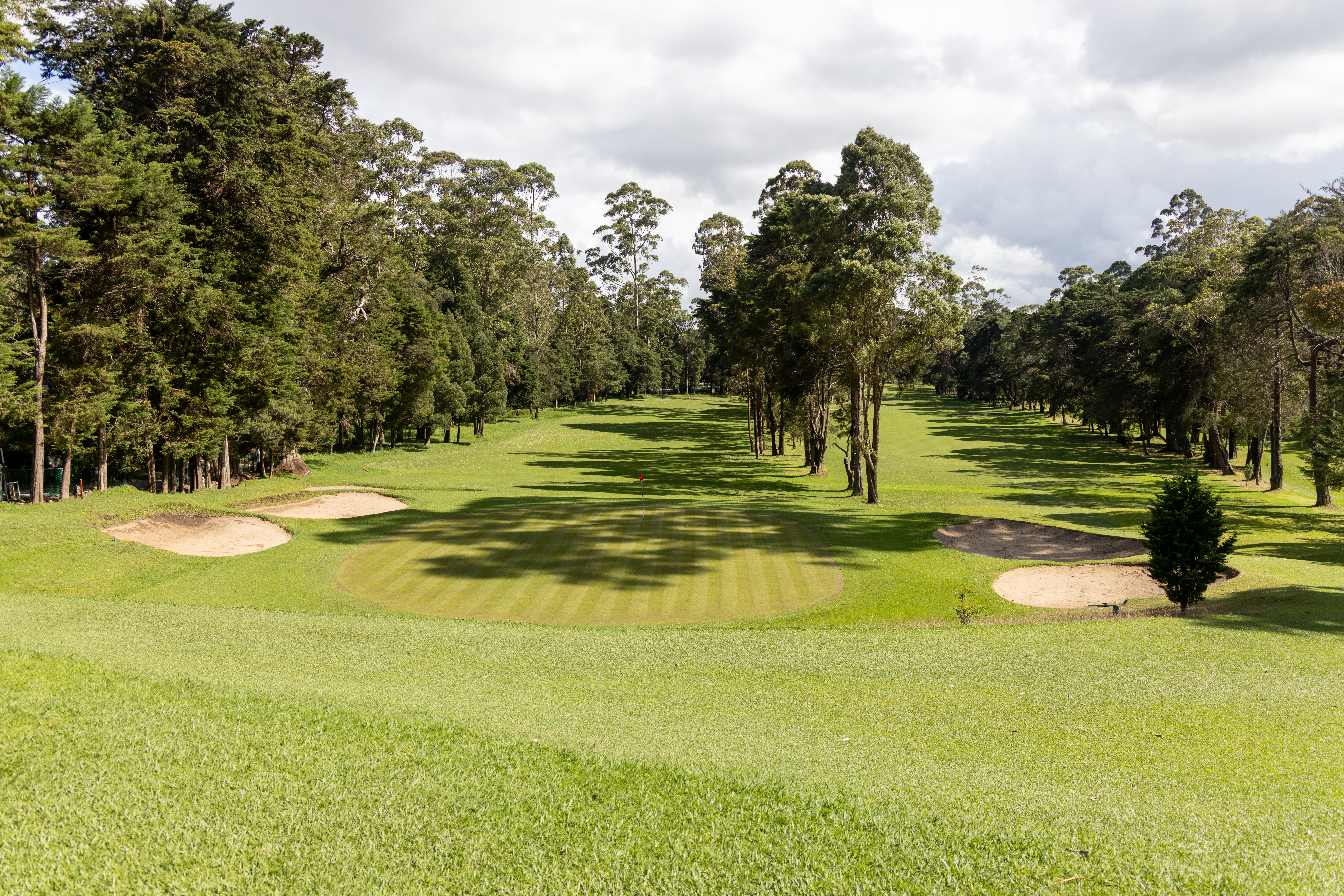
Lunch was scheduled at the Nawara Eliya Golf Club which has a rich history as one of only 4 golf clubs in Sri Lanka. The Nuwara Eliya golf course was constructed in 1889 by a Scottish soldier of the Gordon Highlanders for the British servicemen and officials who were posted at Nuwara Eliya. The course opened in 1890 with nine holes and was upgraded and expanded to eighteen holes in 1893. In 1892 a club house was built, overlooking the course which is at an altitude of 1,830 metres above sea level. For the golfers out there, it is an 18-hole, 5,851 m, Par 70 layout.
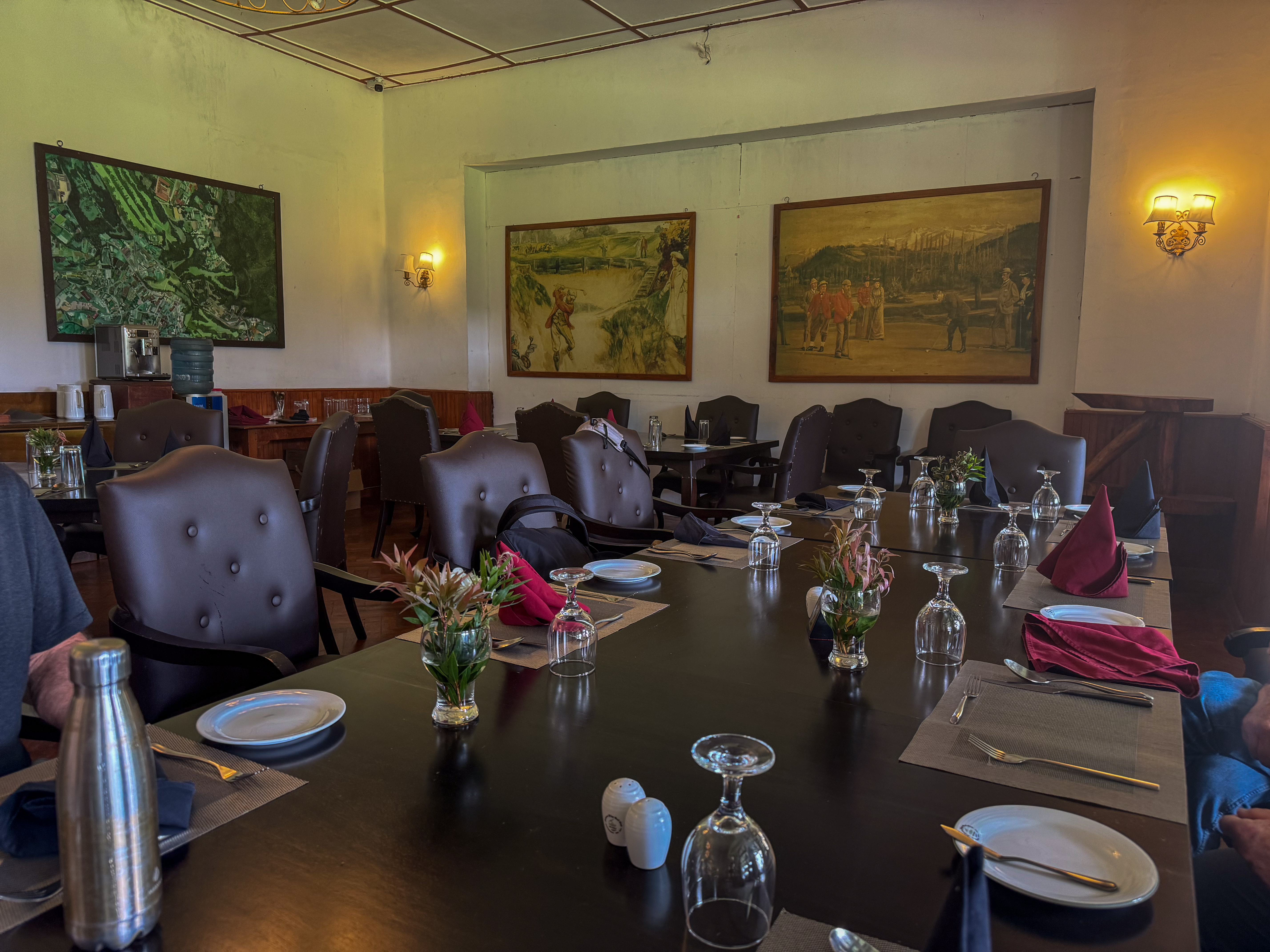
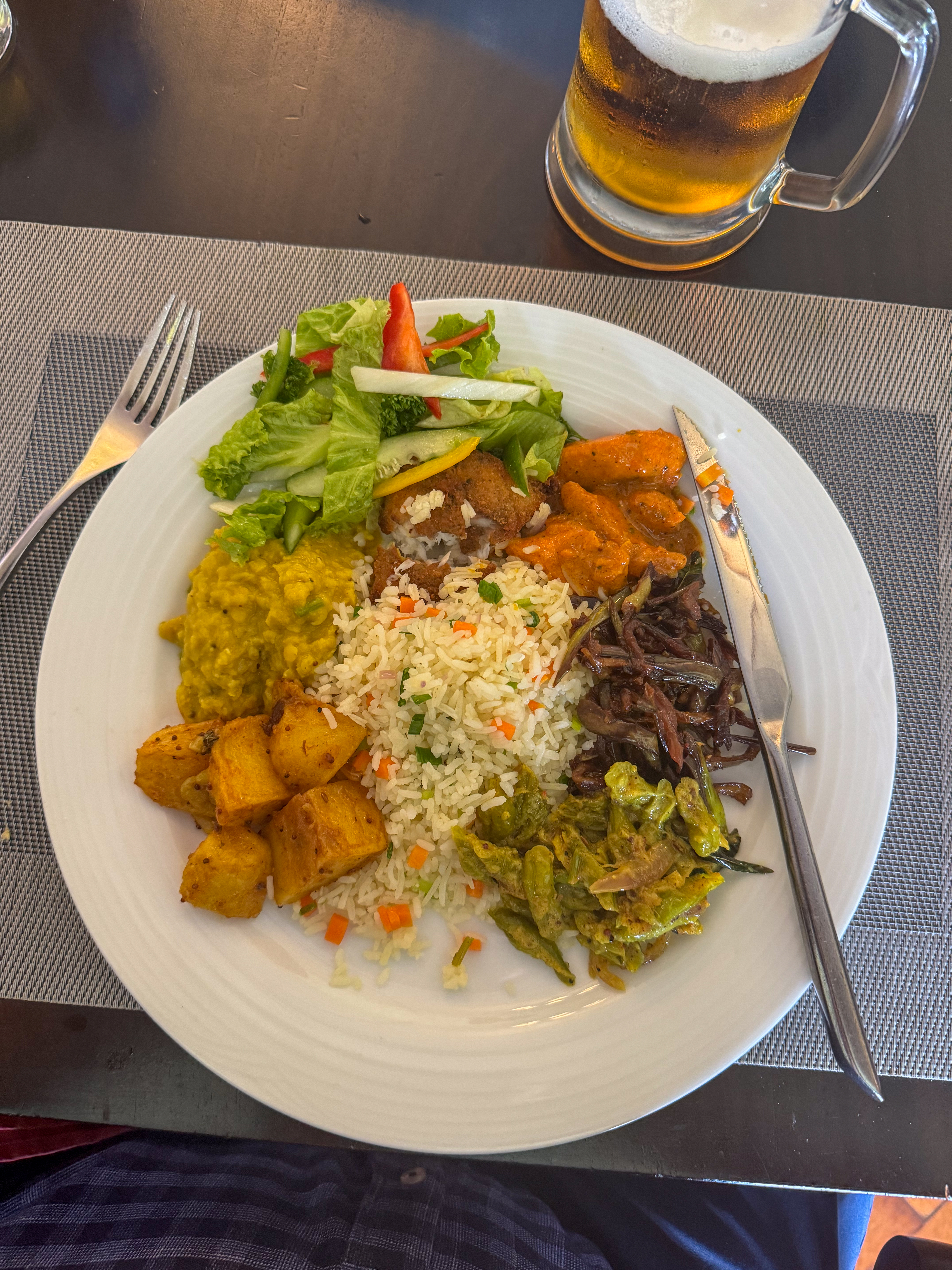
For lunch they prepared a variety of curries that were well cooked. We ate in the club dining room which is a wonderful step back in time. The club rooms are well kept, b ut have definitely managed to keep their old world charm. We all agreed that this was a good lunch.
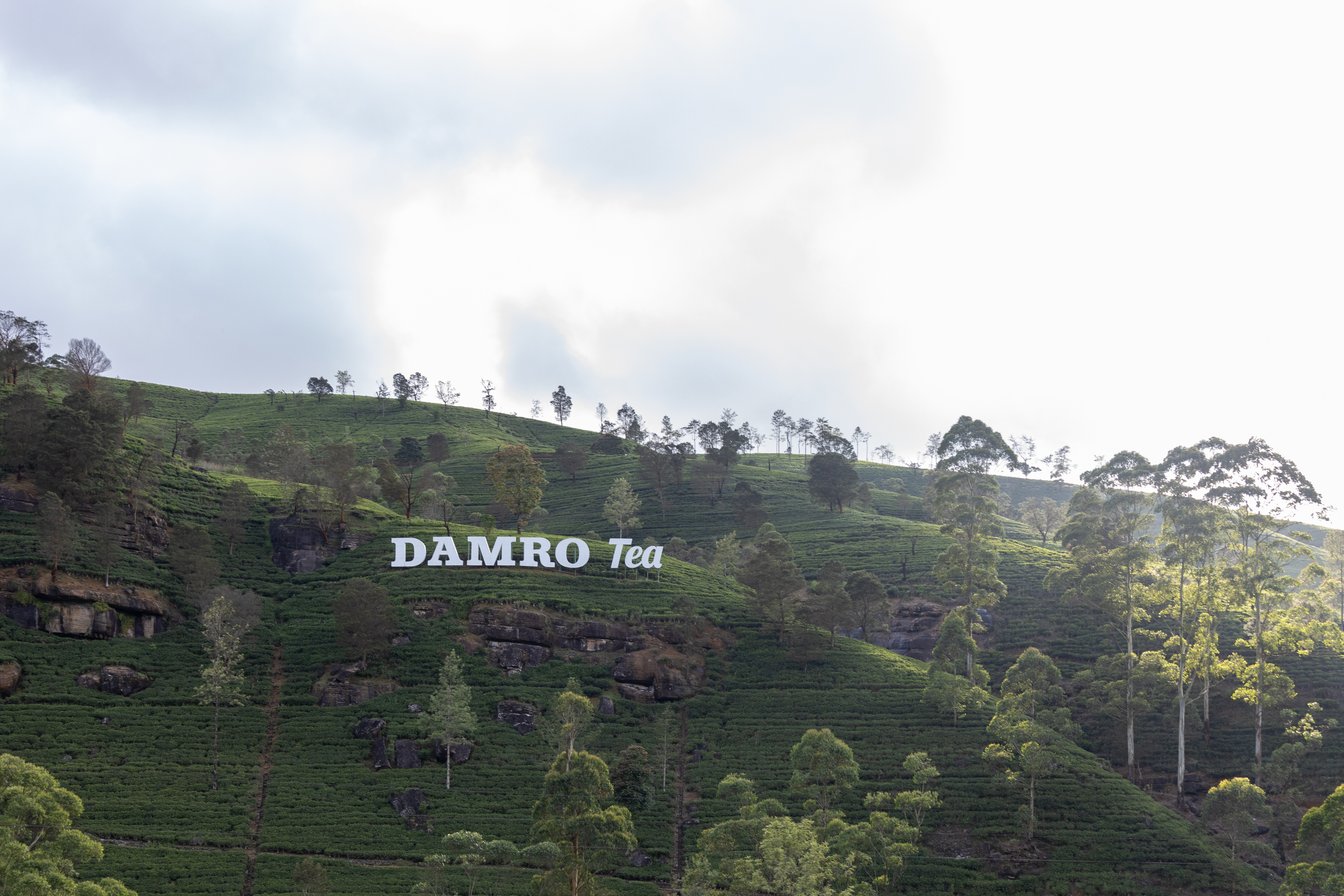
Following lunch we set off to the Damro Tea Factory. Damro is a Sri Lankan furniture manufacturer that designs and sells a diverse range the modern and traditional furniture. The company was founded in 1986, specialising in manufacturing steel chairs. The company has over 275 showrooms across India and Sri Lanka. In March 2017, Damro acquired of the controlling stake of Pussellawa Plantations Ltd and Agalawatte Plantations.
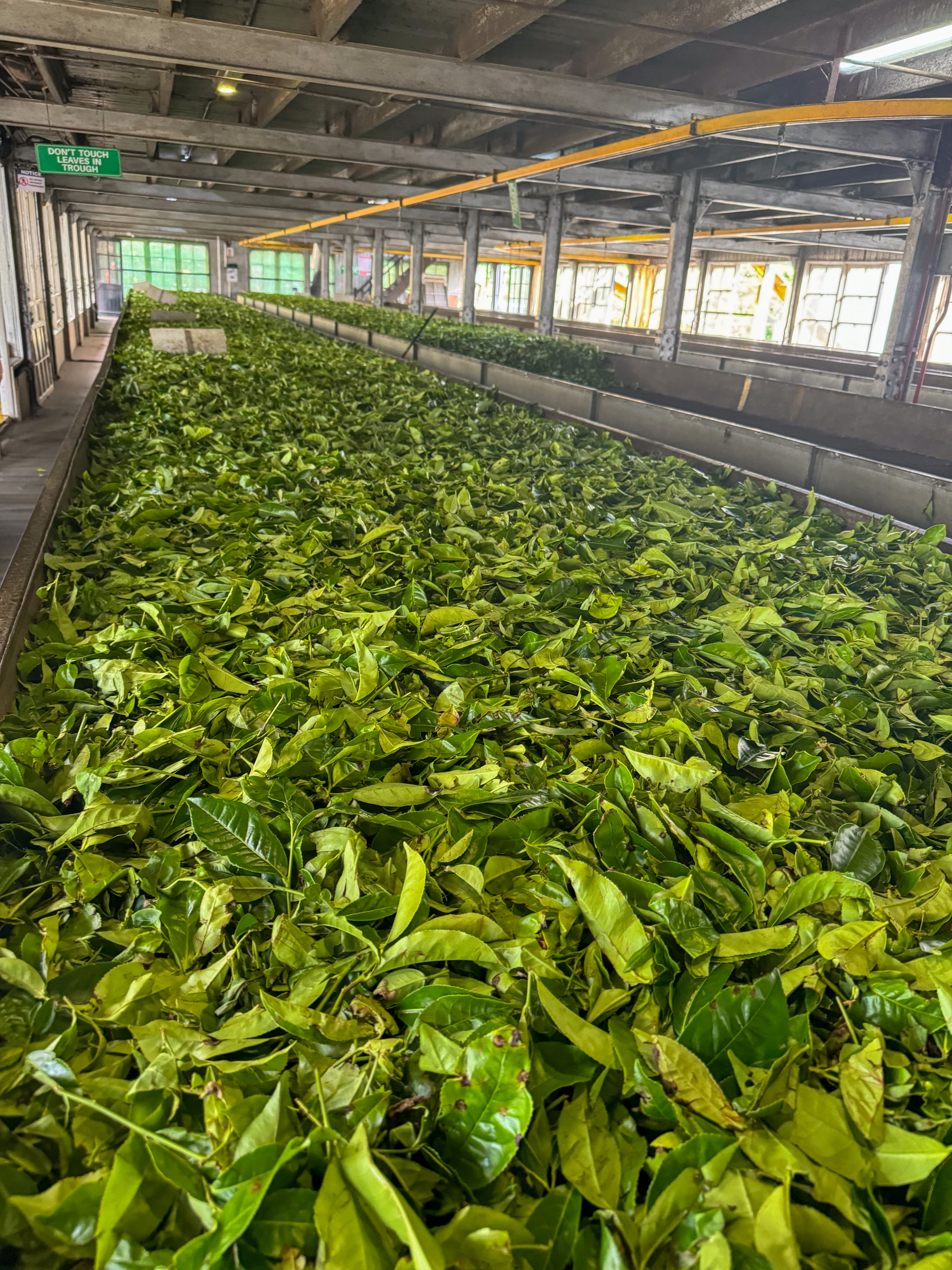
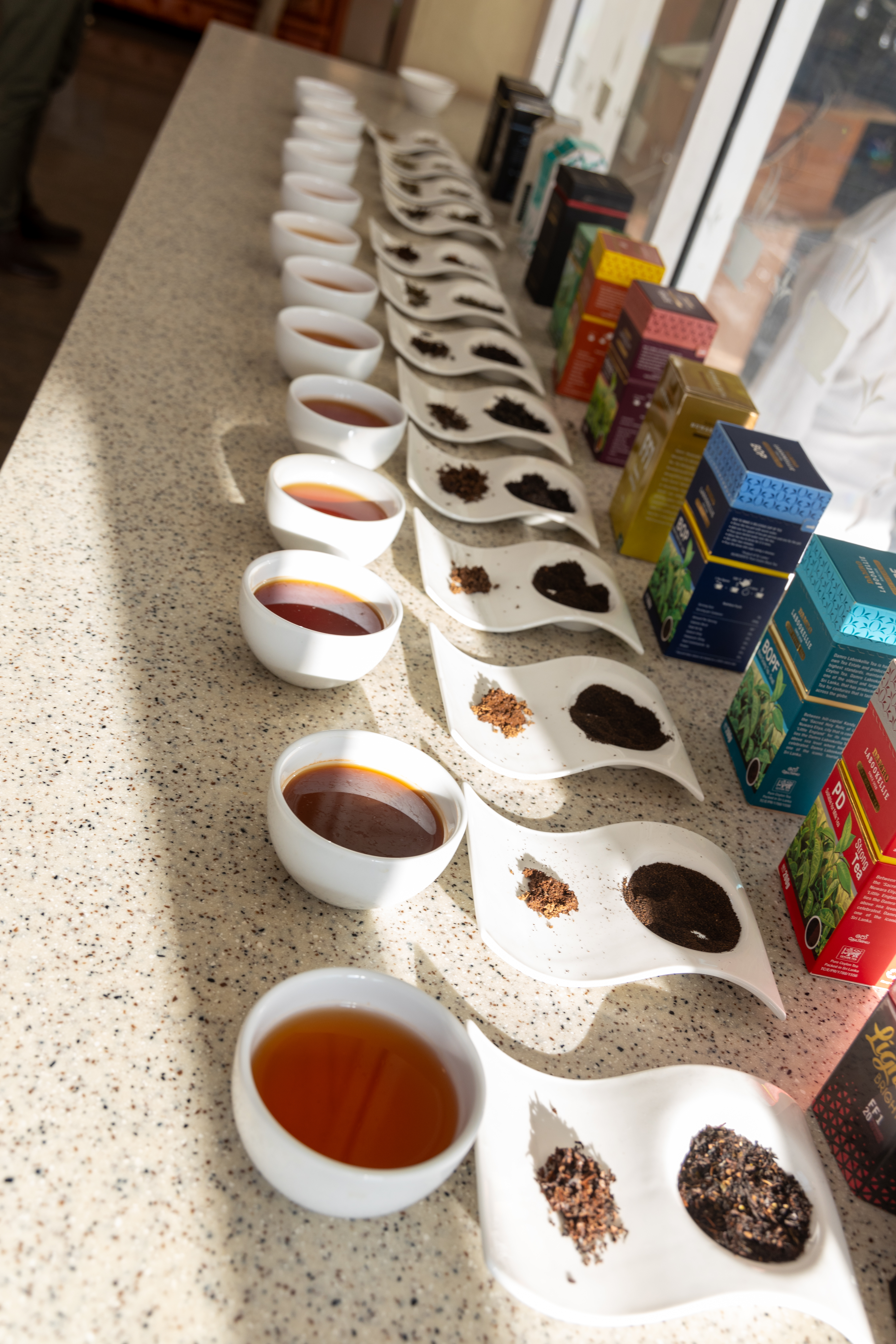
The tour guide explained the tea had been made on this site for about 200 years and detailed the stages of production. Here the tea grows all-year-round so the women employees will pick each plant once per week. They are provided accommodation and receive a small daily rate on top of that. The picked leaves are withered, crushed, steamed and fermented prior to packaging. We tasted some of the teas and visited the shop to buy some cinnamon tea.
Following our tour it was then off to the hotel. It was a bit dark to take photos when we arrived, so I’ll talk more about it tomorrow, but first impressions are that while it has a spectacular facade and lobby area, the rooms are less stunning. More on that tomorrow once I’ve taken some photos.
Until tomorrow

 Rob's "Beats Working" Blog