
We made an early start from the hotel in Jaisalmer this morning, which meant that we made an irregular request for a breakfast. This seemed to be a bit of a challenge, but after following up we received some chicken sandwiches which was better than nothing. We had to retrace our steps for the first 2 hours, back towards Bikaner to get to Jodhpur. Once we turned off, we finally saw some proper sand dunes.
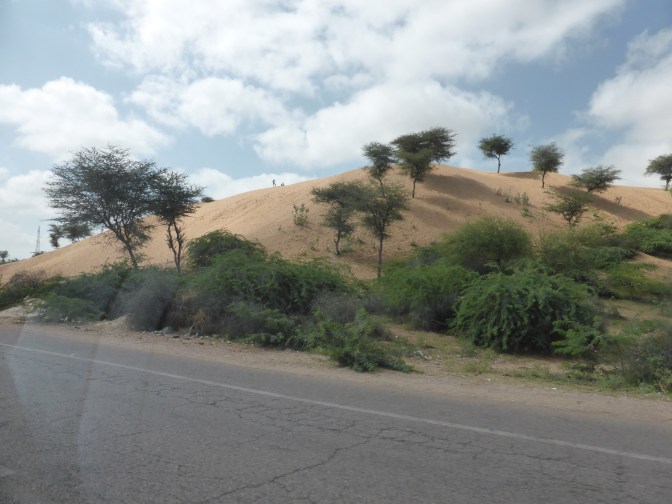
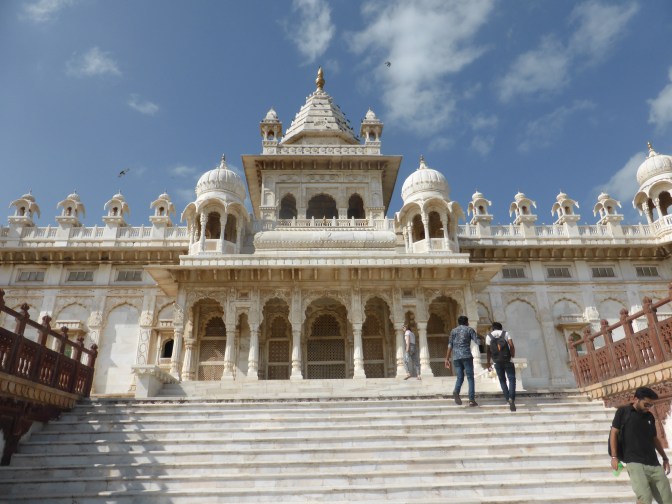
The road into Jodhpur was really poor in places, but we got to our hotel by 1 PM, so had time for lunch before meeting our guide for an afternoon tour. One of the advantages of travelling outside of peak season is room upgrades – It’s the Maharaja Suite tonight. When I booked a lot of the accomodation I noticed that the prices pretty much double after 1 October. Our afternoon began at the Royal Crematorium where there are a number of cenotaphs in honour of the members of the royal family. The main building was built as a tribute from his wife. She could see the monument from her bedroom in the Mehrangarh Fort.
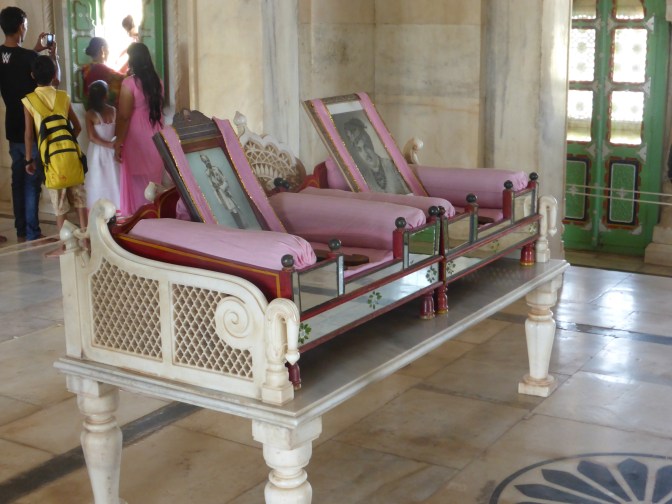
One again, a building of carved marble and inside a simple tribute to the last Maharaja. Prior to entering the building the guide explained some of the details around the Hindu cremation customs and the differences between the different castes.
 From here we drove further up the hill to the Mehrangarh Fort, which is behind us.
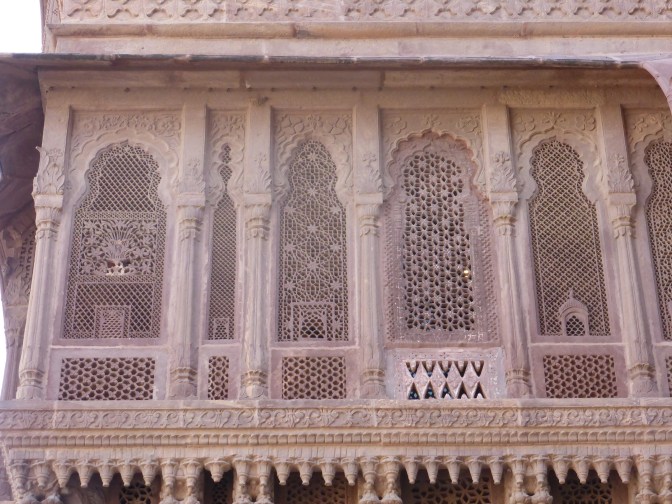
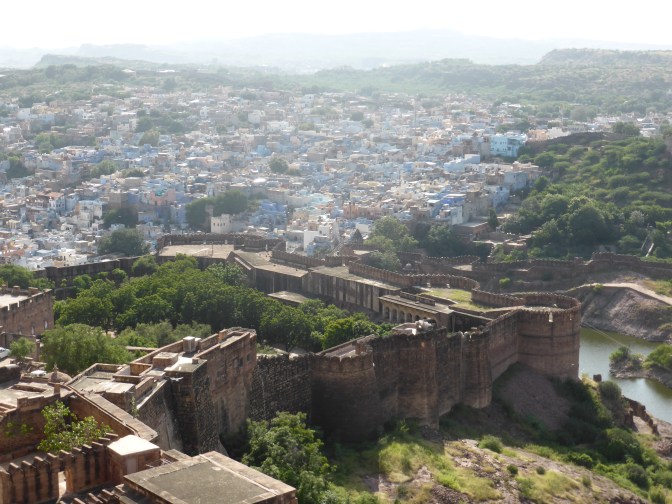
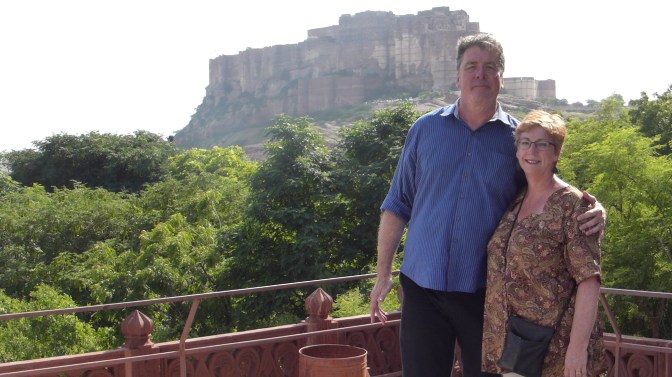 The fort was constructed in 1460 by Rao Jodha who established the city of Jodhpur. There is 13 kilometres of wall surrounding the fort and the old city. Jodhpor is known as the ‘Blue City’ because many of the houses in the old city are painted blue. Prior to 1947, Brahmans (the teachers class) all painted their houses blue. Post-1947 many other houses are painted a light blue colour using an indigo dye. Inside the fort there are numerous courtyards with the classic stone carved screens that we seen at many of the palaces, the main purpose of which is so the women could listen, but not be seen.
There is a good collection of art collected by the Maharaja and an extensive collection of swords, daggers and guns for the military-minded. There are also good views across Jodhpur city which is of similar size to Brisbane. You may be able to make our some of the blue houses in this photo, if you look really hard.
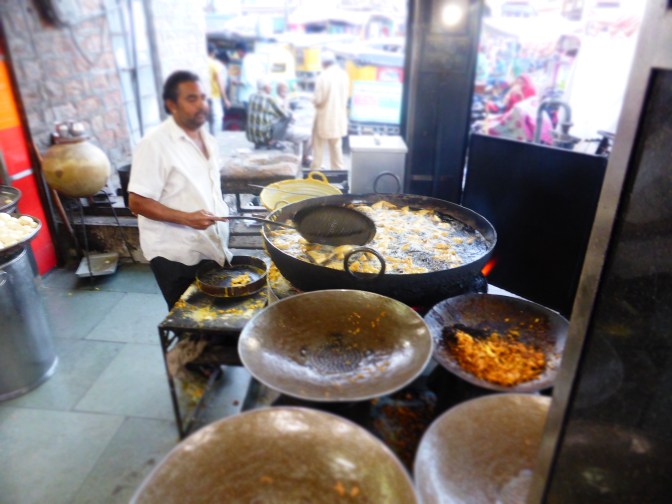
Like many of the other palaces the fort has some magnificently decorated rooms and courtyards. We then went to the old city and bought some more clothes (ooops) prior to heading to the local bazaar. There isn’t much they don’t sell at the bazaar, from vegetables, cooking utensils, textiles, betel leaves and cooked food. One of the local specialities is a samosa stuffed with chilli – called Chilli Bombs. We declined the opportunity to try one, but opted for a world famous Lassi (a yoghurt drink) made only in one store in the market. They reputedly make 60,000 of the Chilli Bombs every day as people queue from 6AM until 9PM.
And the usual array of fruit and veg!
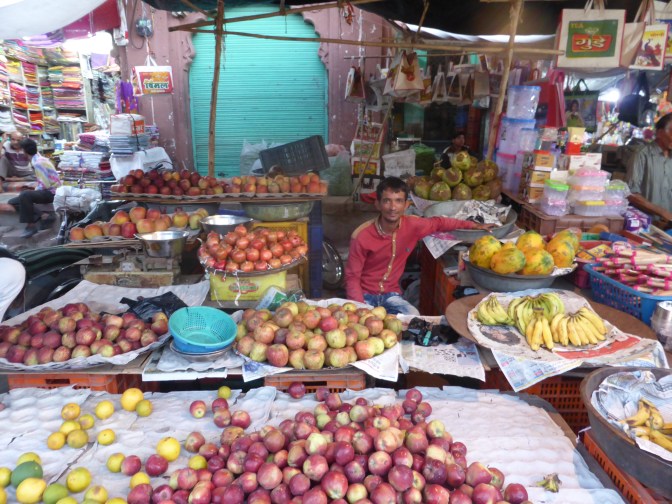
It was a great experience, albeit a little challenging not to run over by all the motorbikes in the narrow laneways.
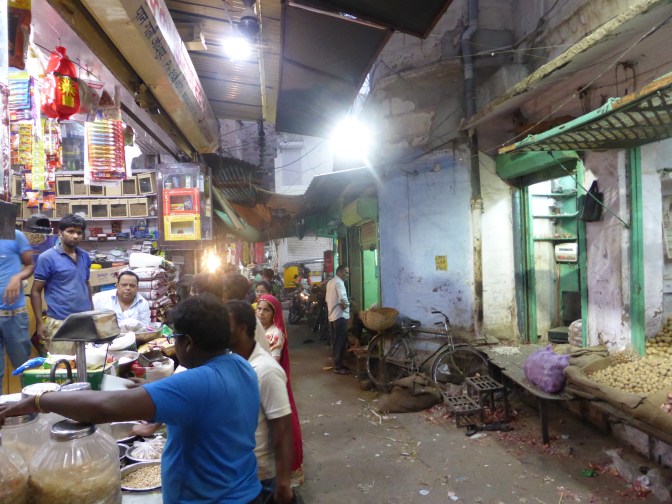
Sometimes staying a the flash hotels can leave you a little disconnected from the everyday lives people live. In hindsight, I probably didn’t leave enough time to do Jodhpur properly, a few hours spare in the morning would have been good to see the City Palace, but we are reliably informed an early start to maximise the time in Udaipur is recommended.
I have been a bit critical of safety issues in India, so I will set the record straight by saying things are improving. The below photo illustrates that safety is a big concern in India.
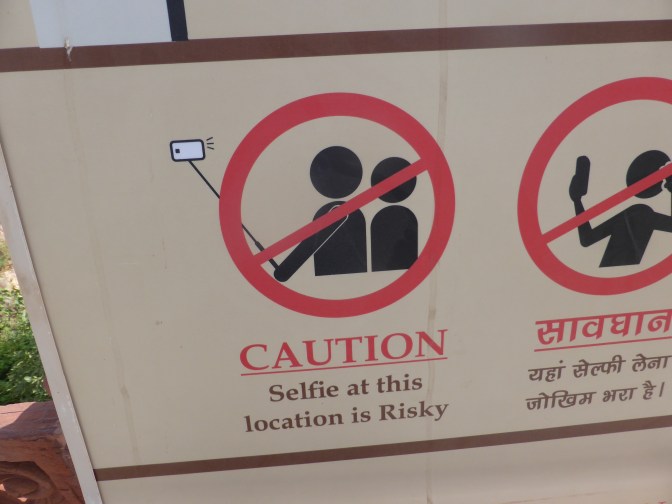
This sign was put in various locations, after a 22 year old man, fell to his death off the Mehrangarh Fort a few months ago, while taking a selfie.
Until tomorrow!

 Rob's "Beats Working" Blog