
We had a nice sleep in this morning, prior to the obligatory buffet breakfast. We then got picked up by our driver and met our guide for a tour of the city. He was an older gentleman called Mahendra Singh. He explained the Spice Road history of Jaisalmer to us, as it was the last stop before a 300 kilometre trek into what is now Pakistan before the next stop on the journey. Most of the traders took a few rest days here before pushing on to Turkey where they could sell their goods to the Europeans. He also talked about the large armed forces presence here and India’s ‘good neighbour’ Pakistan. He grew up here when the countries were at war in 1971.
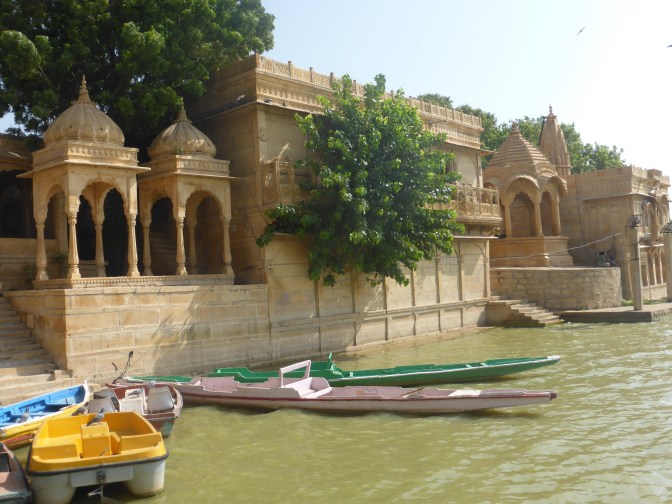
Our first stop was Gadsisar Sagar Lake. This is an artificial lake that was built for water storage in 1367. It is currently about 70% full after a very good monsoon season. It is no longer used for drinking water as there is a canal from the Punjab that supplies much of the water for drinking and irrigation. Many temples line the lake as the water is considered holy, which also means that Hindus can bathe in it and more importantly feed the big catfish that live in the lake.
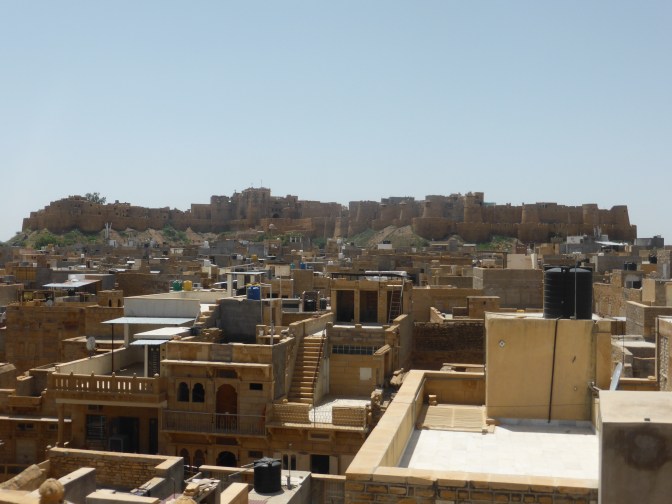
From there we headed to the Jaisalmer Fort, which dates back to 1165. Unfortunately, the fort is built on top of a large moving hill and with a living population of about 5000, the fort walls are literally buckling under the strain and significant remediation is needed to prevent the fort from collapse. The Indian Government has started building new retaining walls that allow the ground water to escape, which is helping.
Here is the view from the Old City
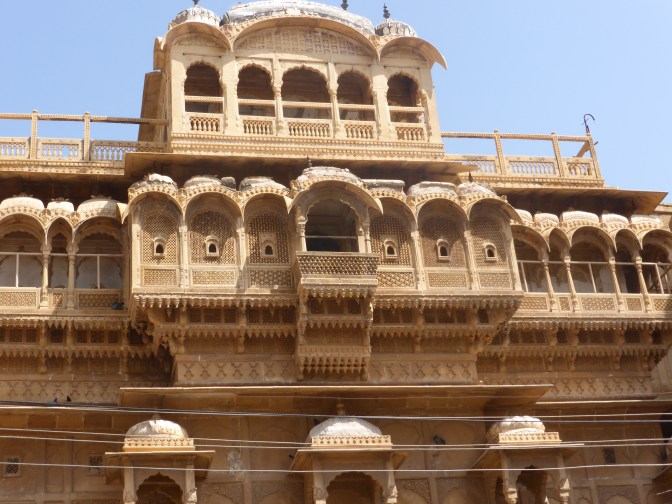
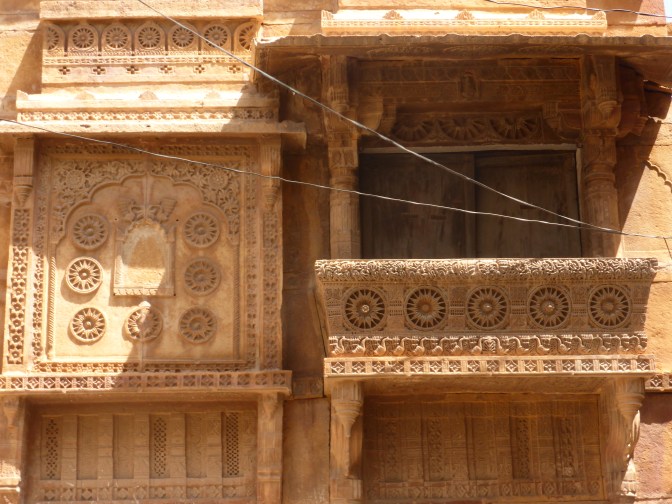
One of the main buildings within the fort is the Royal Palace. Like many of the Havelli’s in Rajasthan it’s best view is from the outside where the ornate stone carvings are visible. All the building in Jaisalmer are built with the local yellow sandstone, which is where the city gets is name as the Golden City.
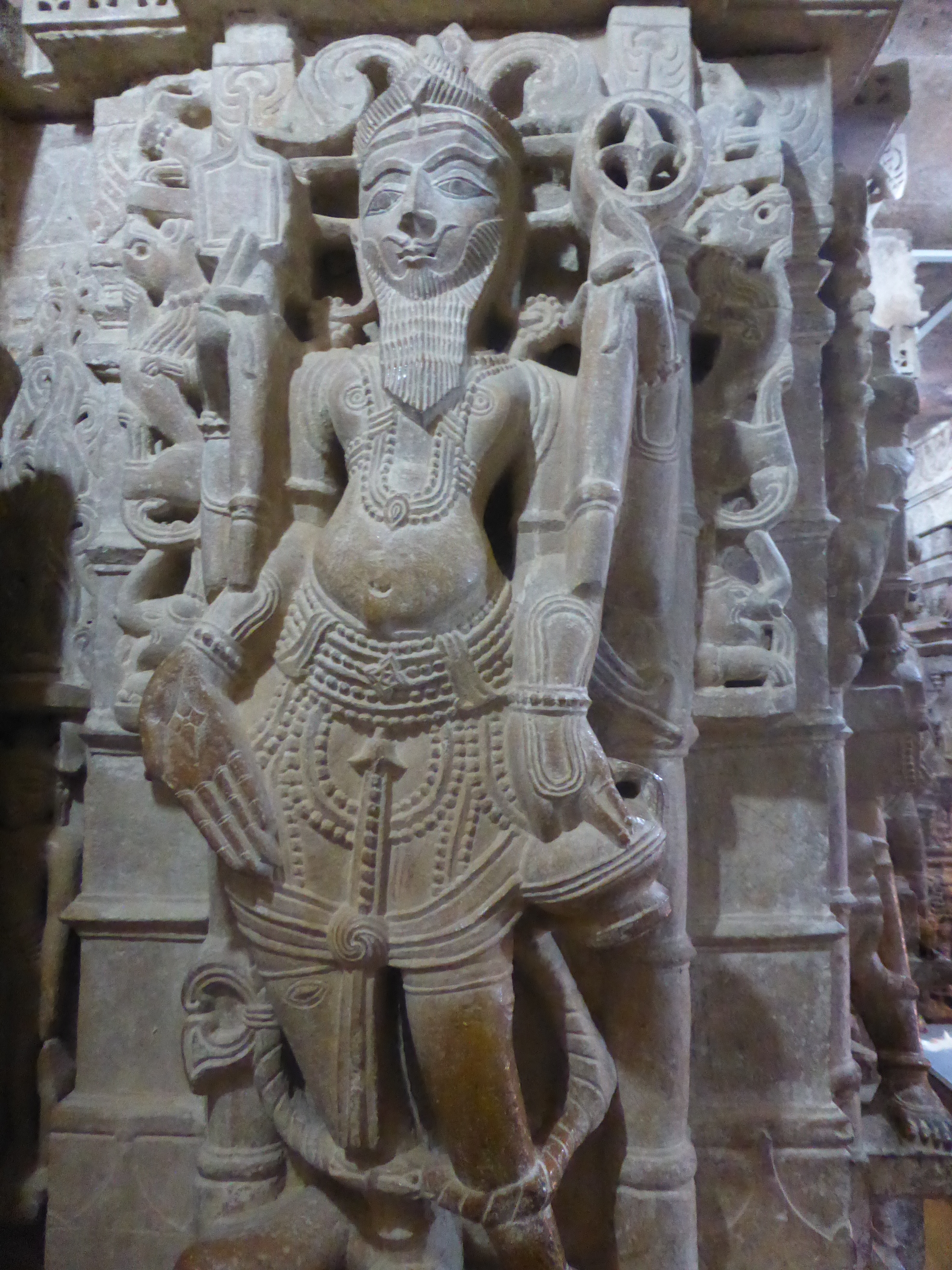
There are also 7 Jain Temples within the fort. Jainism is an off-shoot of Hunduism, that does away with the gods and replaces them with 24 prophets. The Jain diet is ultra-vegan in that they also don’t eat anything that comes out of the ground (potatoes, beetroot etc) because insects may be killed in the harvesting process. The Jain Temples are very ornate and have some magnificent stone carvings. Jainism was founded by the merchant classes, so it’s followers are generally quite wealthy.
We then walked through the old city, where there are several old Havellis (Villas) still in tact. We looked at set of 5 neighbouring Havellis that a father built for his sons, but it took him 60 years to built them, so all the sons were in their 70s by the the time the 100 year old man finished them. There are a number of these around the town … all looking good from the outside.
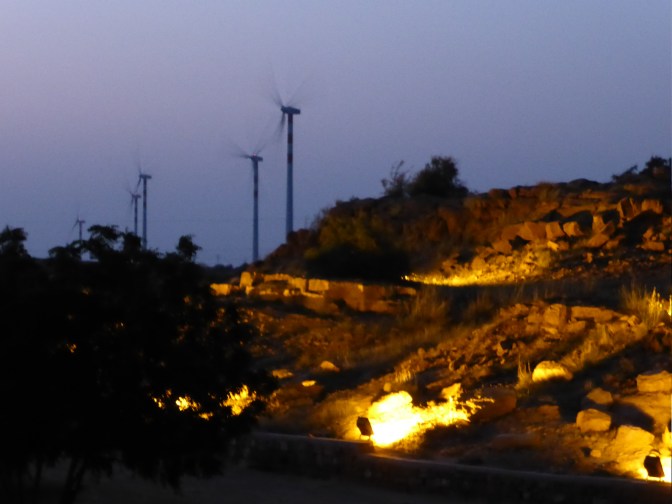
As we drove back to the hotel, we noticed a lot of wind power. In the Jaisalmer region there are about 2,500 windmills. Luckily, there are no threatened species of parrots in this area or complaints about the noise. Renewable energy sources are providing power that would otherwise be generated in ageing coal power plants. The solar panels are also used to bring power to villages that have never had power without the expense of connecting them to the grid. The Thar desert is quite windy and has few rainy days, so it would seem to be a good candidate for these technologies.
We had dinner tonight in the hotel restaurant, which was again a Rajastani Thali meal (small serves of multiple dishes). Once again, the food was amazing and there was far too much of it. We ate early, as we have an early start tomorrow, to travel to Jodhpur.
Until tomorrow!

 Rob's "Beats Working" Blog